
Loading...
⚡ 1kg Low MOQ · Factory Direct Glitter & Mica⚡ Source Factory Direct Wholesale · Custom Loose Glitter & Mica Pigments · 1kg Low Trial MOQ · 48h Free 50g Lab Samples
mlmcustom@mlmcosmetic.com⚡ 1kg Low MOQ · Factory Direct Glitter & Mica⚡ Source Factory Direct Wholesale · Custom Loose Glitter & Mica Pigments · 1kg Low Trial MOQ · 48h Free 50g Lab Samples
mlmcustom@mlmcosmetic.comLoading...
Technical guide to sample matching shaped glitter for SE cosmetic formulations. Covers BOPET substrate specs, ICP-MS limits, solvent resistance, and sourcing.
Let me skip the preamble. If you are reading this, you have a reference sample of shaped glitter — a star, a heart, a crescent, whatever — and your brand client wants it reproduced exactly in their special-effects (SE) formulation. Maybe it is a gel-based body gloss, a hot-pour wax stick, or a nail lacquer sitting in 70 % butyl acetate. You need the color, the geometry, the substrate behaviour, and the regulatory paper trail to match. And you have probably already discovered that the gap between "looks close on a lightbox" and "survives 12 weeks of 45 °C accelerated stability in a solvent-heavy matrix" is where projects go to die.
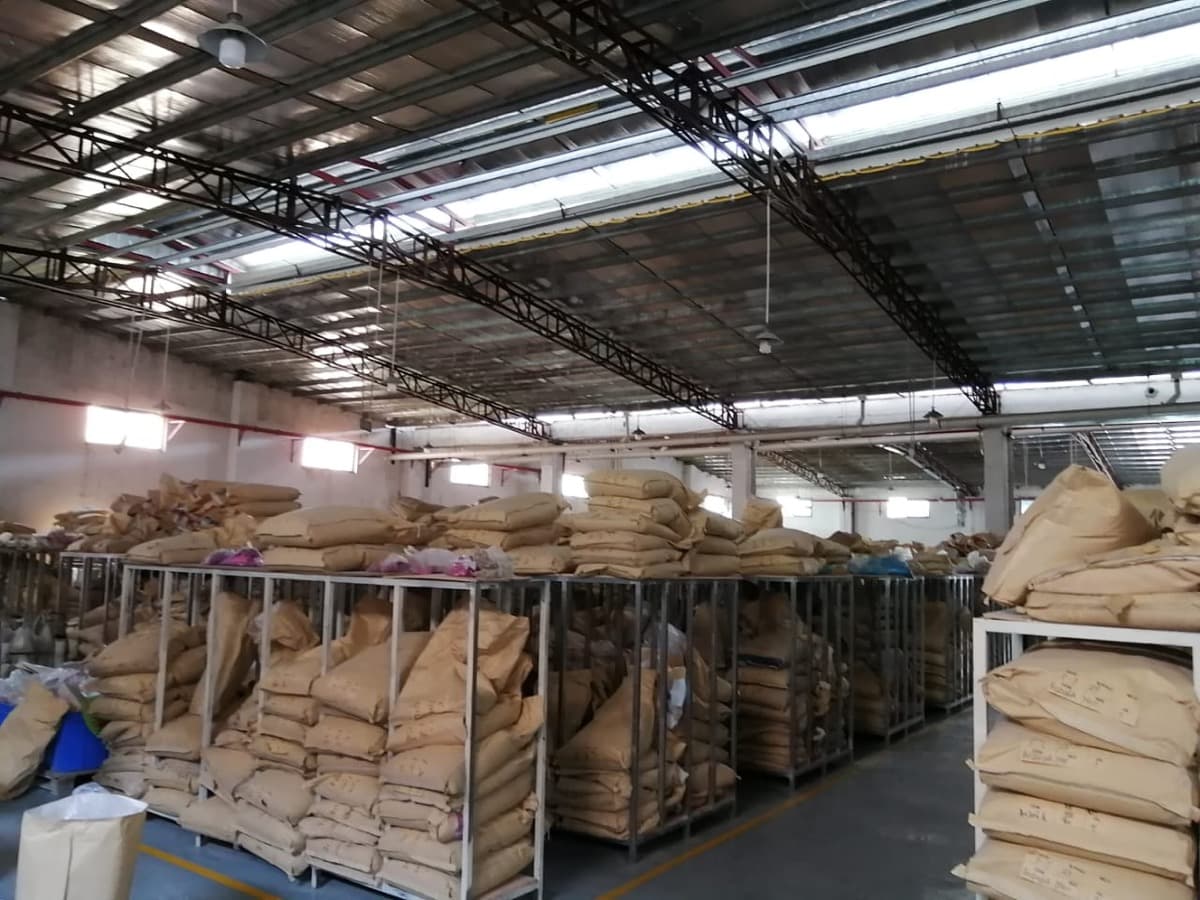
This document is written peer-to-peer, from our formulation and quality team at MLM Pigments (Shenzhen) to the R&D chemists, toxicologists, and procurement directors who actually have to make this work at bench scale and then defend it at production scale. We will walk through substrate architecture, real failure modes we see on our own production floor, hard testing numbers, a benchtop qualification protocol, and sourcing logistics.
Sample matching shaped glitter for cosmetic formulation in SE systems is not a colour-matching exercise. It is a multi-variable reverse-engineering problem. The reference sample encodes at least seven independent parameters:
Get any single one of these wrong and the glitter either looks wrong, performs wrong, or fails regulatory review. We see all three happen regularly with samples sourced from craft-grade suppliers who relabel for cosmetic use.
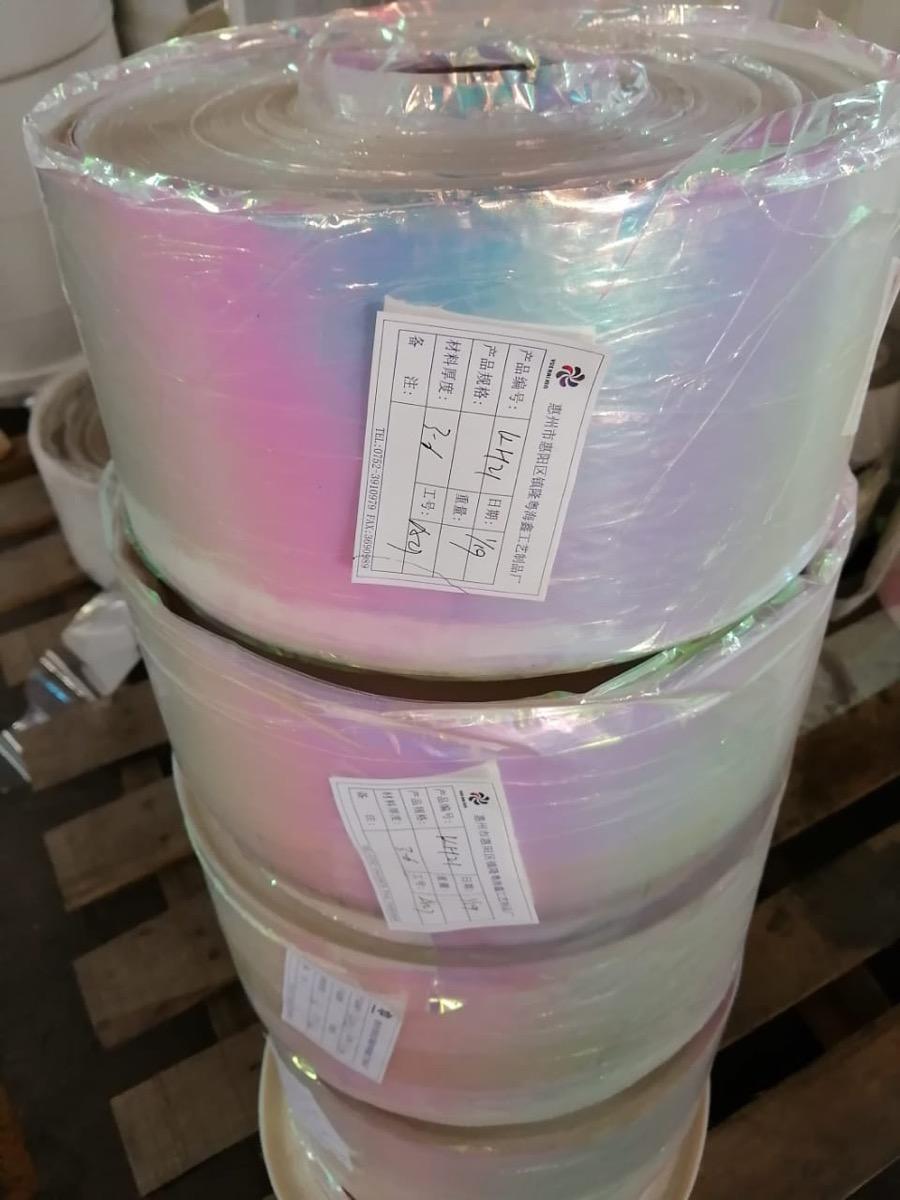
Most shaped cosmetic glitter starts as BOPET film. The biaxial orientation step stretches the PET in both the machine direction and the transverse direction, which increases crystallinity to roughly 35–42 %. This crystallinity is what gives the film its tensile strength (typically 180–230 MPa) and its resistance to solvent attack. Under-oriented film — the kind you find in cheap craft glitter — has lower crystallinity, lower tensile strength, and will curl or warp when it contacts ethyl acetate or MEK at elevated temperatures.
The film is then metallised (vacuum-deposited aluminium at ~40 nm optical density) or laminated with inorganic pigment layers (iron oxides, titanium dioxide, bismuth oxychloride) and sealed with a cross-linked polyurethane or UV-cured epoxy-acrylate topcoat. The cross-link density of this topcoat is the single most critical variable for solvent resistance. If the topcoat is under-cured — and we check every batch with FTIR peak-ratio analysis at the 1730 cm⁻¹ carbonyl and 1530 cm⁻¹ N-H bands — the dye system underneath is exposed to solvent ingress.
With REACH Annex XVII Entry 78 restricting intentionally added synthetic polymer microparticles (effective October 2023, with transition periods running through 2029 for rinse-off and 2035 for leave-on cosmetics), cellulose-based carriers are no longer optional for EU-destined products. Our regenerated cellulose films are sourced from sustainably managed wood pulp, cast to 20–35 µm, and coated with cosmetic-grade aluminium and pigment layers. Biodegradation is validated per OECD 301B (ready biodegradability in aqueous medium, > 60 % ThOD within 28 days) and ISO 14855 (composting conditions, > 90 % within 6 months).
The practical trade-off: cellulose substrates have lower tensile strength (~80–110 MPa) and higher moisture sensitivity. They are not suitable for long-term immersion in water-continuous emulsions above 40 °C. If your formulation is an O/W body gel stored in tropical SE Asian warehouses at ambient 32–38 °C, you need to run your own 12-week stability at 45 °C and watch for edge swelling and opacity loss. We provide the raw material; you own the finished-product stability assessment.
For hot-pour applications — anhydrous lipsticks, body butter sticks, wax melts poured at 80–95 °C — synthetic fluorphlogopite-based glitter offers thermal endurance that organic polymers cannot match. These are inorganic platelets coated with metal oxide colour layers (TiO₂, Fe₂O₃, SnO₂), then precision-cut. Continuous thermal exposure up to 800 °C with zero colour shift. The limitation is geometry: because the substrate is a rigid mineral platelet rather than a flexible film, complex shapes (hearts, flowers, custom logos) are difficult to produce cleanly at sizes below 1.0 mm. Above 1.5 mm, we can achieve acceptable edge definition with laser ablation cutting rather than rotary dies.
Here is where sample matches fail in production. The reference sample looks perfect on a glass slide under D65 illumination. Then the formulator drops it into a nail lacquer base at 22 °C, and within 72 hours the stars are bleeding magenta dye into the clear coat.
| Substrate | Continuous Max Temp | Short-Term Spike (< 30 s) | Failure Mode at Threshold |
|---|---|---|---|
| BOPET (cross-linked PU topcoat) | 160 °C | 185 °C | Film curl, topcoat micro-cracking, loss of specular reflection |
| BOPET (UV-cured epoxy-acrylate topcoat) | 200 °C | 220 °C | Yellowing of topcoat (∆b* > 1.5 by spectrophotometer) |
| Regenerated cellulose | 120 °C | 140 °C | Browning, embrittlement, edge charring |
| Synthetic fluorphlogopite | 800 °C | > 1000 °C | Substrate intact; binder loss if organic binder used in formulation |
If your hot-pour lipstick base is held at 85 °C in a jacketed vessel for 45 minutes while you batch-fill moulds, BOPET with a PU topcoat is fine. If your process involves a brief spike to 190 °C during a flash-heat step, you need the epoxy-acrylate topcoat variant or synthetic mica. We have seen formulators lose entire 500-unit pilot runs because they spec'd the wrong topcoat chemistry. Ask us for the specific thermal endurance grade during sample-match feasibility.
Tested per our internal protocol: shaped glitter particles immersed in neat solvent in sealed borosilicate vials, stored at 45 °C, evaluated at 7, 30, 90, and 180 days for dye migration (visual and UV-Vis spectrophotometry of supernatant at λ_max of dye), film integrity (optical microscopy at 50×), and dimensional change (calibrated image analysis).
| Solvent System | BOPET / PU Topcoat | BOPET / Epoxy-Acrylate | Regen. Cellulose | Synth. Fluorphlogopite |
|---|---|---|---|---|
| Butyl acetate (nail lacquer primary) | Pass 180 d | Pass 180 d | Fail 7 d (edge swell) | Pass 180 d |
| Ethyl acetate | Pass 180 d | Pass 180 d | Fail 7 d | Pass 180 d |
| Isopropyl alcohol | Pass 180 d | Pass 180 d | Pass 90 d, marginal 180 d | Pass 180 d |
| MEK (methyl ethyl ketone) | Pass 90 d, marginal 180 d | Pass 180 d | Fail 7 d | Pass 180 d |
| Water / glycol emulsion (70:30) | Pass 180 d | Pass 180 d | Pass 90 d (monitor edge) | Pass 180 d |
| Dimethicone (5 cSt) | Pass 180 d | Pass 180 d | Pass 180 d | Pass 180 d |
"Pass" = zero detectable dye in supernatant by UV-Vis (absorbance < 0.01 AU at dye λ_max), no dimensional change > 2 %, no visible curl or delamination. "Marginal" = absorbance 0.01–0.05 AU or dimensional change 2–5 %. "Fail" = visible colour in supernatant or structural breakdown.
For nail lacquer formulators specifically: if your system contains toluene (still used in some markets outside the EU "3-free" norm), request our toluene-resistance data separately. Toluene is more aggressive than butyl acetate against PU topcoats, and we have a specific high-cross-link-density grade for that application.
Shaped glitter is only as good as its cut edges. A rotary slitting knife that has processed 800 km of film develops micro-burrs on the cutting edge. Those burrs create ragged particle perimeters that:
We monitor burr height with SEM imaging at 500× on a per-shift basis. Acceptance criterion: burr height < 3 µm on any edge segment. Knife sets are rotated every 400 km of film processed, regardless of visual appearance. This is a cost we absorb because reworking a batch of glitter with ragged edges costs more than preventive knife changes.
For complex geometries (stars, crescents, custom logos), we use precision laser die-cutting rather than mechanical rotary dies. Laser cutting eliminates mechanical burrs entirely but introduces a narrow heat-affected zone (HAZ) at the cut edge, typically 5–15 µm wide. In the HAZ, the PET crystallinity is locally reduced, which can create a slight optical haze band visible under 20× magnification. For most cosmetic applications this is invisible to the consumer. For ultra-premium prestige packaging where the glitter is viewed through a clear window under retail lighting, we can minimise HAZ width to < 8 µm by adjusting pulse frequency and feed rate. Flag this requirement at the sample-match stage.
Every production batch is tested on our Agilent 7800 ICP-MS system. We acid-digest a representative composite sample (HNO₃/H₂O₂ microwave digestion per EPA 3052 adapted protocol) and screen against the following release limits:
| Element | MLM Internal Limit | EU SCCS / Health Canada Limit | US FDA Guidance |
|---|---|---|---|
| Lead (Pb) | < 2.0 ppm | < 2.0 ppm (SCCS) | < 10 ppm (21 CFR advisory) |
| Arsenic (As) | < 1.0 ppm | < 0.5 ppm (SCCS) | < 3 ppm |
| Mercury (Hg) | < 1.0 ppm | < 1.0 ppm | < 1 ppm |
| Cadmium (Cd) | < 1.0 ppm | < 1.0 ppm (SCCS) | < 3 ppm |
| Antimony (Sb) | < 5.0 ppm | < 5.0 ppm | — |
| Nickel (Ni) | < 5.0 ppm | Sensitisation concern (SCCS) | — |
Note on arsenic: our internal limit is 1.0 ppm, but the EU SCCS recommends < 0.5 ppm for products applied near the eye area. If your finished product targets the EU eye-area category, confirm this with your safety assessor and request that we tighten our release criterion for your specific batch. We can hit < 0.5 ppm consistently on our standard PET and synthetic mica substrates; cellulose substrates occasionally run 0.4–0.7 ppm depending on pulp source, so we screen incoming cellulose rolls before committing them to your order.
During a sample match, we run ATR-FTIR (attenuated total reflectance) on both the customer's reference sample and our trial production output. We compare spectra in the 4000–650 cm⁻¹ range and calculate a correlation coefficient. Acceptance criterion: r ≥ 0.97 for the substrate polymer region (1800–650 cm⁻¹). This catches substrate substitution (e.g., a supplier claiming PET but actually shipping PVC — yes, we have seen this), under-cured topcoats, and unexpected plasticiser additives.
For transparent or translucent glitter variants (no metallised layer), we measure haze per ASTM D1003 on a BYK haze-gard i. Typical spec: haze < 3.0 % for a clear-coated PET film at 23 µm thickness. Haze above 5 % usually indicates surface micro-scratching from handling, incomplete topcoat cure, or moisture ingress into the cellulose substrate.
When a formulator adds 2–5 % w/w shaped glitter to a gel or emulsion, the system viscosity changes. We do not control your formulation, but we do provide bulk density and specific gravity data (PET glitter: ~1.40 g/cm³; cellulose: ~1.45 g/cm³; synthetic mica: ~2.80 g/cm³) so you can model the impact on your Brookfield RVT readings. A common mistake: formulators spec a shaped glitter at 3 % w/w, then find that the higher-density synthetic mica variant at the same weight percentage occupies less volume and produces a visually sparser effect. If you are switching substrates during a sample match, recalculate on a volume basis, not weight.
Before committing to a production-scale order, run these three tests on your 1 kg sample-match trial material. This protocol has saved our customers from at least a dozen failed production batches over the past two years.
Place 0.5 g of shaped glitter in 20 mL of your formulation's most aggressive solvent (for nail lacquer: neat butyl acetate; for gel polish: HEMA monomer; for water-based body gloss: your complete aqueous phase). Seal in a borosilicate vial. Store at 50 °C for 72 hours. After 72 hours, decant the supernatant into a quartz cuvette and measure absorbance at the dye's λ_max using a UV-Vis spectrophotometer. If absorbance > 0.02 AU against a solvent blank, the topcoat encapsulation is insufficient for your system. Stop. Do not proceed to formulation trials.
Heat your anhydrous base (wax, butter, or silicone blend) to your maximum process temperature + 10 °C safety margin. Add glitter at 3 % w/w, stir at 100 RPM with a paddle impeller for 5 minutes, then pour into moulds and cool to 25 °C at ambient rate. Demould and inspect under 10× magnification for: particle curl (edges lifting > 15° from the plane), colour shift (compare against unprocessed reference under D65/10° illumination), and topcoat cracking (visible as loss of specular reflection). Any of these = wrong substrate grade for your process temperature.
For liquid or gel formulations: prepare a 100 mL batch at your target glitter loading in a graduated cylinder. Cap and invert three times. Photograph at T=0, T=1h, T=4h, T=24h, T=7d. Measure the clear-supernatant height as a percentage of total column height. If > 15 % clear layer develops within 24 hours, your system viscosity is too low to suspend the particle at its current size and density. Options: increase system viscosity (rheology modifier), reduce particle size (request a smaller cut from us), or switch to a lower-density substrate.
MLM Pigments is registered as a cosmetic raw material manufacturing facility. Our Shenzhen site maintains records structured to support US FDA MoCRA facility registration requirements and EU Regulation 1223/2009 Responsible Person documentation needs.
What we supply with every batch:
What remains the brand owner's responsibility:
We do not make regulatory claims about your finished product. We give you the raw material data so your safety assessor can do their job with confidence.
| Order Type | Packaging | MOQ | Typical Lead Time | Use Case |
|---|---|---|---|---|
| Sample match trial | 1 kg vacuum-sealed aluminium foil barrier bag (MVTR < 0.5 g/m²/day per ASTM F1249) | 1 kg per SKU | 10–15 business days from colour/geometry approval | Benchtop feasibility, stability testing |
| Pilot production | 5 kg vacuum-sealed bags, 4 bags per carton | 5 kg per SKU | 15–20 business days | Pilot batch (typically 200–1000 units) |
| Bulk production | 25 kg UN-rated fibre drums with PE liner, palletised | 25 kg per SKU | 20–30 business days | Full production runs |
Shipping: EXW Shenzhen, FOB Shenzhen/Yantian, or DDP to your nominated warehouse. For air freight (sample-match trials), glitter ships as non-hazardous general cargo. Cellulose-based glitter is hygroscopic; if your transit route passes through high-humidity tropical ports (Singapore, Bangkok, Ho Chi Minh City), we double-bag with desiccant sachets inside the outer barrier bag at no additional charge.
The 1 kg trial bag is specifically designed for the sample-match qualification workflow. It gives you enough material to run the three-step benchtop protocol above, produce 50–100 bench-scale test units, and retain a 200 g archive sample for future batch-to-batch comparison.
| Formulation Type | Recommended Substrate | Max Process Temp | Key Risk | Mitigation |
|---|---|---|---|---|
| Nail lacquer (nitrocellulose) | BOPET / epoxy-acrylate topcoat | 25 °C (ambient mix) | Dye migration into butyl acetate / ethyl acetate solvent system | Confirm cross-link density via FTIR; run 72-hr solvent soak |
| Gel nail polish (UV-cure) | BOPET / epoxy-acrylate topcoat | 25 °C (ambient) + UV exposure | UV degradation of dye; inhibition of gel cure by glitter surface | Test gel cure hardness (Shore A) with and without glitter |
| Hot-pour lipstick | Synthetic fluorphlogopite | 85–95 °C | Settling in low-viscosity melt before solidification | Increase melt viscosity or pour immediately after glitter addition |
| Pressed powder eyeshadow | BOPET / PU topcoat | 25 °C (press temp) | Electrostatic clumping in powder hopper; uneven distribution | Ground hopper, add 0.5 % fumed silica to powder phase before glitter addition |
| Water-based body gel / gloss | Regen. cellulose (EU market) or BOPET (non-EU) | 25–40 °C | Cellulose edge swelling in high-water-activity systems; microbial growth at glitter/gel interface | Preservative efficacy test (PET) with glitter present; limit water activity < 0.85 for cellulose |
| Anhydrous body butter stick | BOPET / PU topcoat or synth. mica | 70–80 °C | Particle curl at pour temp (BOPET) | Verify thermal grade; consider synthetic mica for > 75 °C |
For technical questions on shaped glitter sample matching, solvent resistance data, or regulatory documentation, contact our formulation support team directly through mlmpigments.com. We respond to technical enquiries within one business day, Shenzhen time.
MLM Pigments supplies cosmetic-grade raw materials from our Shenzhen manufacturing facility. Batch-specific Certificates of Analysis, ICP-MS reports, FTIR spectra, and SDS documents are provided upon request to support your regulatory filings. Finished formulation safety assessment, stability validation, and regulatory compliance remain the sole responsibility of the brand owner and their qualified safety assessor.
Disclaimer: Technical data and regulatory references provided herein (including EU Regulation 2023/2055, EU Regulation 1223/2009, and US FDA MoCRA) are based on current legislative texts and laboratory test parameters for raw materials manufactured by MLM Pigments. This documentation is intended solely to support independent brand formulators and Responsible Persons in compiling their Cosmetic Product Safety Reports (CPSR) and product filings. Final formulation compliance, toxicological risk assessment, and finished product registration remain the responsibility of the brand owner.
Looking for custom formulation or laboratory testing samples? Contact our MLM Pigments technical engineering team or request a free sample kit directly.
Target Formulation Material:
Shaped Glitter Sample Matching for Cosmetic Formulation in SE
Includes 50g sealed lab pouch, lot-specific COA, Technical Data Sheet (TDS), and ISO 22716 regulatory package.
Whether formulating eyeshadow palettes, lip glosses, nail polishes, or compounding industrial epoxy resin, start with our 1kg low trial MOQ or complimentary 50g qualification sample with complete TDS and batch COA.