
Loading...
⚡ 1kg Low MOQ · Factory Direct Glitter & Mica⚡ Source Factory Direct Wholesale · Custom Loose Glitter & Mica Pigments · 1kg Low Trial MOQ · 48h Free 50g Lab Samples
mlmcustom@mlmcosmetic.com⚡ 1kg Low MOQ · Factory Direct Glitter & Mica⚡ Source Factory Direct Wholesale · Custom Loose Glitter & Mica Pigments · 1kg Low Trial MOQ · 48h Free 50g Lab Samples
mlmcustom@mlmcosmetic.comLoading...
Technical guide: sample-matching craft glitter for EU cosmetic formulation. ICP-MS limits, BOPET substrate data, solvent resistance, and DE regulatory compliance.
Author: Senior Chief Formulation Chemist & Materials Quality Director, MLM Pigments (mlmpigments.com) — Shenzhen, China OEM cosmetic raw material factory. EU 1223/2009, FDA MoCRA-aware supply chain. We supply raw materials and batch documentation (CoA, ICP-MS, FTIR). Finished formulation safety assessment remains the responsibility of the brand owner's Qualified Person / Safety Assessor.
Let me skip the preamble. If you are a cosmetic chemist, toxicologist, or procurement director trying to match a craft-grade glitter sample into a cosmetic formula destined for the German market, you already know the pitch deck version. Here is what actually goes wrong on the bench and on the filling line — the failure modes nobody puts in the sales PDF.
Failure Mode 1: Dye migration in solvent nail lacquer. Your client sends a reference sample — a gorgeous holographic hex-cut glitter they found at a craft fair in Düsseldorf. You drop it into a standard nitrocellulose nail lacquer base (roughly 25% butyl acetate, 18% ethyl acetate, balance toluene-free solvent blend). Within 36 hours the lacquer has turned pink. The aluminium-metallised BOPET film held up fine, but the colorant layer was a non-lake organic dye. It bled. The craft supplier never tested for solvent bleed because scrapbook adhesive is aqueous PVA. This is the single most common sample-match failure we see from European brand teams — roughly 40% of first-round sample submissions we receive reference a craft-origin glitter with a non-cosmetic dye system.
Failure Mode 2: Electrostatic clumping in powder hoppers. Hex-cut PET film at 0.2 mm generates significant triboelectric charge during pneumatic transfer. If your powder filling line runs at < 35% RH (common in climate-controlled German facilities during winter), you get clumping, bridging in the hopper throat, and inconsistent fill weights. The craft supplier's spec sheet says nothing about surface resistivity or anti-stat coating because they never filled a powder compact on a Fette press.
Failure Mode 3: Rotary slitting knife burrs. Cheap craft glitter is die-cut or rotary-slit with blades that are changed on a cost-optimised schedule, not a quality-optimised one. The result: micro-burrs on the cut edge of each particle. Under 40× magnification you see jagged PET shards. In an eye-area product, that is a sharp-particle risk flagged by EU SCCS guidance (SCCS/1617/20). Your Safety Assessor will reject it, and they should.
Failure Mode 4: Heavy metal contamination from metallic vacuum deposition. Aluminium vacuum deposition is clean when the chamber is maintained. But multi-purpose craft-glitter lines sometimes run copper, brass, or mixed-metal targets on the same chamber. Cross-contamination pushes antimony or lead above cosmetic thresholds. We have seen incoming craft glitter samples test at 8 ppm Pb on our Agilent 7800 ICP-MS — four times the 2 ppm limit we hold ourselves to.
These are not hypothetical risks. These are the actual bench notes from the last 18 months of sample-match projects we have run for brand clients filing in Germany.
Most cosmetic-grade glitter starts as biaxially-oriented polyethylene terephthalate (BOPET) film, typically 12 µm or 23 µm gauge. The biaxial orientation matters because it controls crystallinity — and crystallinity controls solvent resistance. A properly oriented PET film (crystallinity index ≥ 45% by DSC, measured per ASTM D3418) will resist ethyl acetate and butyl acetate immersion at 25°C for well beyond 72 hours without hazing, swelling, or delamination. Under-oriented film (crystallinity < 35%) will haze within 24 hours. If your supplier cannot provide a DSC crystallinity certificate, you have a problem.
We test incoming BOPET film haze per ASTM D1003 on a BYK haze-gard plus. Incoming acceptance: haze ≤ 2.0%. After 72-hour immersion in butyl acetate at 25°C, haze must remain ≤ 4.0%. Anything above that means the film is softening and your glitter will lose optical clarity in a nail lacquer bottle on the retail shelf within weeks.
RC film (derived from wood pulp via the viscose process) is classified as a non-synthetic polymer under the October 2023 ECHA Annex XVII microplastic restriction scope. That classification is the reason every German brand team is asking about it right now. But RC has real formulation limitations that your craft-glitter supplier will not volunteer:
Inorganic platelet. Thermal stability to 800°C. Completely inert in every solvent system you will encounter in cosmetics. Not subject to microplastic restriction. The trade-off: the optical effect is fundamentally different — a pearlescent or metallic sheen rather than a discrete particulate sparkle. If your brief calls for visible, distinct glitter particles, synthetic mica is not a direct substitute. It is a different product category that solves a different aesthetic brief.
| Parameter | BOPET (PET) Glitter | Regenerated Cellulose Glitter | Synthetic Mica |
|---|---|---|---|
| Max continuous temp (°C) | 200 | 150–160 | 800 |
| Ethyl acetate 72-hr immersion (25°C) | Pass — no haze, no bleed | Fail above ~35% v/v concentration | Pass — inert |
| Butyl acetate 72-hr immersion (25°C) | Pass (crystallinity ≥ 45%) | Fail — swelling, delamination | Pass — inert |
| Aqueous pH 4–8 stability (25°C, 4 weeks) | Stable | Stable (softening onset ~6 weeks) | Stable |
| Isopropyl alcohol 24-hr immersion | Stable | Stable | Stable |
| Propylene glycol / glycerol systems | Stable | Stable | Stable |
| Brookfield RVT viscosity impact (1% w/w loading in clear gel, spindle #4, 20 rpm, 25°C) | Negligible (< 3% increase) | Slight increase (5–8%) due to water absorption and particle swelling | Negligible (< 2% increase) |
| Formulation System | BOPET Glitter | RC Glitter | Synthetic Mica | Critical Watch Point |
|---|---|---|---|---|
| Nitrocellulose nail lacquer (EA/BA solvent) | ✅ Preferred | ❌ Incompatible | ✅ Compatible (different aesthetic) | Dye bleed test mandatory — 72 hr solvent immersion |
| Water-based peel-off nail | ✅ | ✅ | ✅ | Check anti-stat coating compatibility with acrylic latex binder |
| Anhydrous lip gloss (polybutene base) | ✅ | ✅ (if aw < 0.3) | ✅ | Settling velocity — match particle density to base viscosity |
| Hot-pour lip balm (wax stick, pour 80–90°C) | ✅ | ✅ (margin tight) | ✅ | RC: do not exceed 85°C pour temp with sustained hold |
| O/W body lotion (aw > 0.85) | ✅ | ⚠️ 30-month PAO risk | ✅ | RC softening — accelerated stability at 40°C/75% RH mandatory |
| Pressed powder compact | ✅ | ✅ | ✅ | Electrostatic clumping — specify anti-stat surface treatment or ionising bar on press |
| Shower gel / wash-off | ✅ (but microplastic concern post-restriction) | ✅ Preferred (non-synthetic polymer) | ✅ | RC is the regulatory-preferred substrate for rinse-off in DE |
| UV gel nail (radical cure) | ✅ | ❌ (HEMA/acrylate monomer attack) | ✅ | PET must withstand UV-A 365 nm without yellowing — request UV stability data |
Every production batch is tested on an Agilent 7800 ICP-MS. We run acid digestion (HNO₃/H₂O₂ microwave, per EN 16711-2 adapted protocol) and report against these hard limits:
| Element | MLM Internal Limit | EU Cosmetic Typical Guidance | Method |
|---|---|---|---|
| Lead (Pb) | < 2 ppm | < 10 ppm (Canada < 10, FDA < 10) | ICP-MS |
| Arsenic (As) | < 1 ppm | < 2 ppm | ICP-MS |
| Mercury (Hg) | < 1 ppm | < 1 ppm | ICP-MS |
| Cadmium (Cd) | < 1 ppm | < 5 ppm (varies by jurisdiction) | ICP-MS |
| Antimony (Sb) | < 5 ppm | < 5 ppm (EU migration limit for food-contact PET — we apply same threshold) | ICP-MS |
| Nickel (Ni) | < 10 ppm | Sensitisation concern — EU SCCS tracks | ICP-MS |
Our limits are tighter than most regulatory floors because German notified bodies and Safety Assessors routinely expect it. If your Safety Assessor asks for lower thresholds, talk to us — we can run dedicated deposition chamber batches with tighter process controls, but lead time extends to 20–25 business days.
Every batch gets an ATR-FTIR scan (Bruker Alpha II, diamond ATR crystal, 4 cm⁻¹ resolution, 32 scans). We compare against a locked reference spectrum for each SKU. Correlation coefficient must be ≥ 0.995. This catches substrate substitution (someone swapping RC for PET or vice versa), coating chemistry changes, and contamination from line changeover. The FTIR spectrum is included in the Certificate of Analysis on request.
Delta-E (CIE Lab*, D65/10°, measured on X-Rite Ci7800 spectrophotometer against sealed master retention sample) must be ≤ 1.5 batch-to-batch. For metallised silver and gold glitters, we also report specular gloss at 60° per ASTM D523 — minimum 85 GU for mirror-grade, 40–60 GU for satin-grade.
Before you commit to a production order, run these three tests. They take about a week and will save you from a failed stability study six months later.
If the sample passes all three steps, you have a defensible basis to proceed to a pilot production batch. If it fails at Step 1, stop. The substrate or dye chemistry is wrong for your system, and no amount of formulation adjustment will fix a fundamental material incompatibility.
MLM Pigments provides for each glitter SKU:
We do not file on behalf of the brand. We supply the raw material documentation that your Responsible Person and Safety Assessor need to build the Product Information File (PIF). The safety assessment of the finished cosmetic product is the legal obligation of the brand owner under Article 10 of Regulation 1223/2009.
The October 2023 ECHA restriction on intentionally added microplastics captures synthetic polymer particles 1 nm – 5 mm. Conventional PET glitter falls within scope for leave-on cosmetics. The restriction includes transitional periods:
Regenerated cellulose glitter is classified outside the restriction scope because RC is not a synthetic polymer. This is why we are seeing a significant procurement shift among German brand clients toward RC substrates — particularly for leave-on body shimmer and pressed powder applications.
MLM Pigments stocks both PET and RC substrates. We will provide the polymer classification documentation your regulatory team needs, but the final determination of restriction applicability to your specific finished product is a matter for your regulatory affairs team and legal counsel.
For brands dual-filing in the US: MLM Pigments's Shenzhen facility is registered under the FDA MoCRA facility registration requirement (effective July 2024). We provide safety substantiation data packages aligned with 21 CFR Part 700 series requirements. Our CoA format includes all data points typically requested by US-side toxicologists.
We ship DAP (Delivered at Place) to Hamburg, Bremen, or any named DE address via established freight forwarders experienced with cosmetic raw material customs classification. HS code for PET glitter: typically 3926.90 (articles of plastics, other) or 3204 (if classified as a colour preparation) — confirm with your customs broker, as classification can vary by coating composition.
MLM Pigments is an OEM cosmetic raw material factory. We manufacture and supply cosmetic-grade glitter, biodegradable glitter, and effect pigments. We provide batch-level analytical documentation — ICP-MS, FTIR, particle size, micro, CoA — to support your regulatory filings and safety assessments.
We are not your Responsible Person. We are not your Safety Assessor. We do not file your CPNP notification. We do not make finished-product safety claims.
What we do is give your technical team the hard data and the material consistency they need so that your Safety Assessor can do their job with confidence, and your procurement director can sleep at night knowing the next 500 kg delivery will match the 1 kg sample that passed your bench qualification.
If you are running a sample-match project for the DE market and need 1 kg trial quantities with full documentation, contact our technical sales team at mlmpigments.com. We will send material, not marketing.
For brands evaluating the microplastic transition, our Cosmetic Grade Biodegradable Glitter range is available in matched colours and cuts against conventional PET references — request a side-by-side sample set and we will ship both substrates for your own comparative bench testing.
MLM Pigments — Shenzhen, China. OEM cosmetic raw materials. Glitter, biodegradable glitter, effect pigments. EU 1223/2009 documentation. FDA MoCRA registered facility.
Disclaimer: Technical data and regulatory references provided herein (including EU Regulation 2023/2055, EU Regulation 1223/2009, and US FDA MoCRA) are based on current legislative texts and laboratory test parameters for raw materials manufactured by MLM Pigments. This documentation is intended solely to support independent brand formulators and Responsible Persons in compiling their Cosmetic Product Safety Reports (CPSR) and product filings. Final formulation compliance, toxicological risk assessment, and finished product registration remain the responsibility of the brand owner.
Looking for custom formulation or laboratory testing samples? Contact our MLM Pigments technical engineering team or request a free sample kit directly.
Target Formulation Material:
Craft Glitter Sample Match for Cosmetic Formulation in DE
Includes 50g sealed lab pouch, lot-specific COA, Technical Data Sheet (TDS), and ISO 22716 regulatory package.
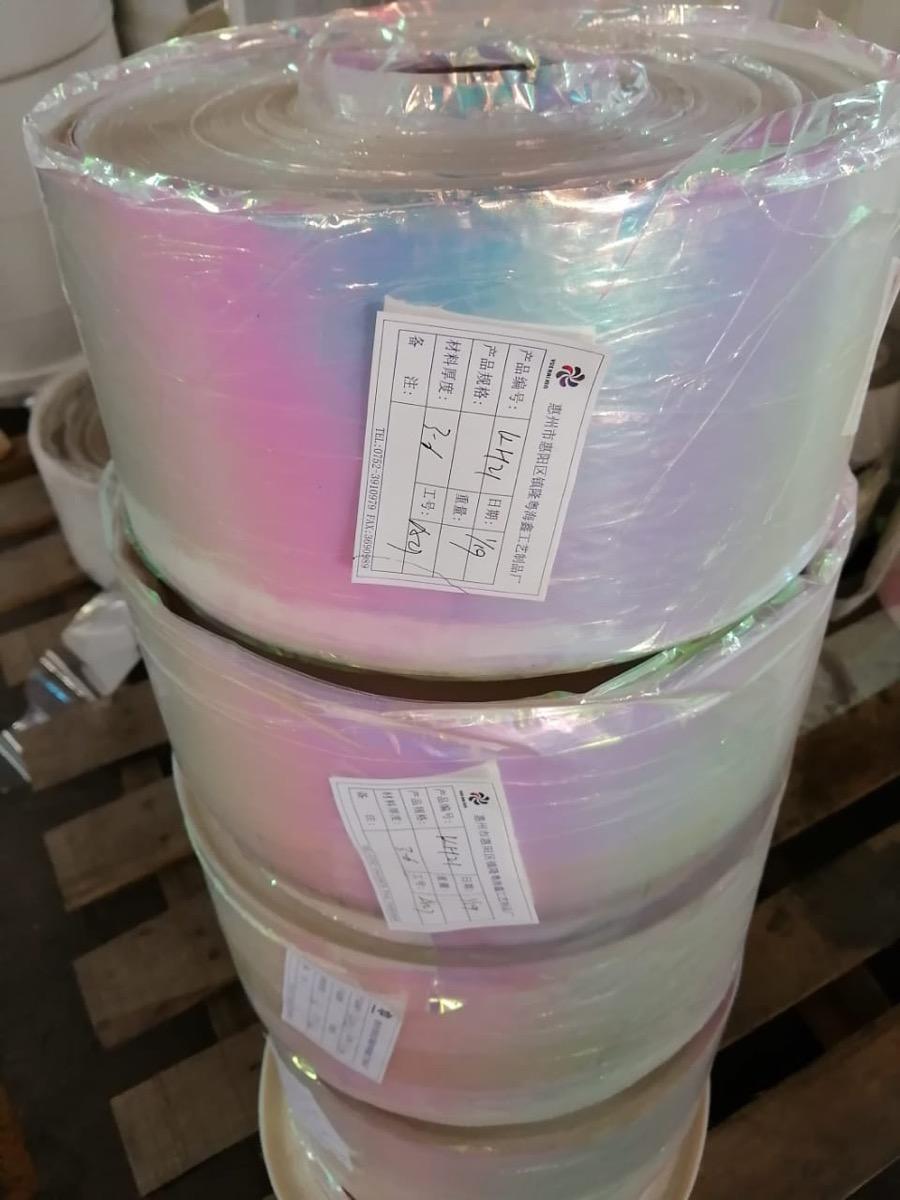
Whether formulating eyeshadow palettes, lip glosses, nail polishes, or compounding industrial epoxy resin, start with our 1kg low trial MOQ or complimentary 50g qualification sample with complete TDS and batch COA.