
Loading...
⚡ 1kg Low MOQ · Factory Direct Glitter & Mica⚡ Source Factory Direct Wholesale · Custom Loose Glitter & Mica Pigments · 1kg Low Trial MOQ · 48h Free 50g Lab Samples
mlmcustom@mlmcosmetic.com⚡ 1kg Low MOQ · Factory Direct Glitter & Mica⚡ Source Factory Direct Wholesale · Custom Loose Glitter & Mica Pigments · 1kg Low Trial MOQ · 48h Free 50g Lab Samples
mlmcustom@mlmcosmetic.comLoading...
Technical guide to sample matching biodegradable glitter for US cosmetic formulation: ICP-MS data, solvent resistance, thermal specs, and benchtop qualification protocol.
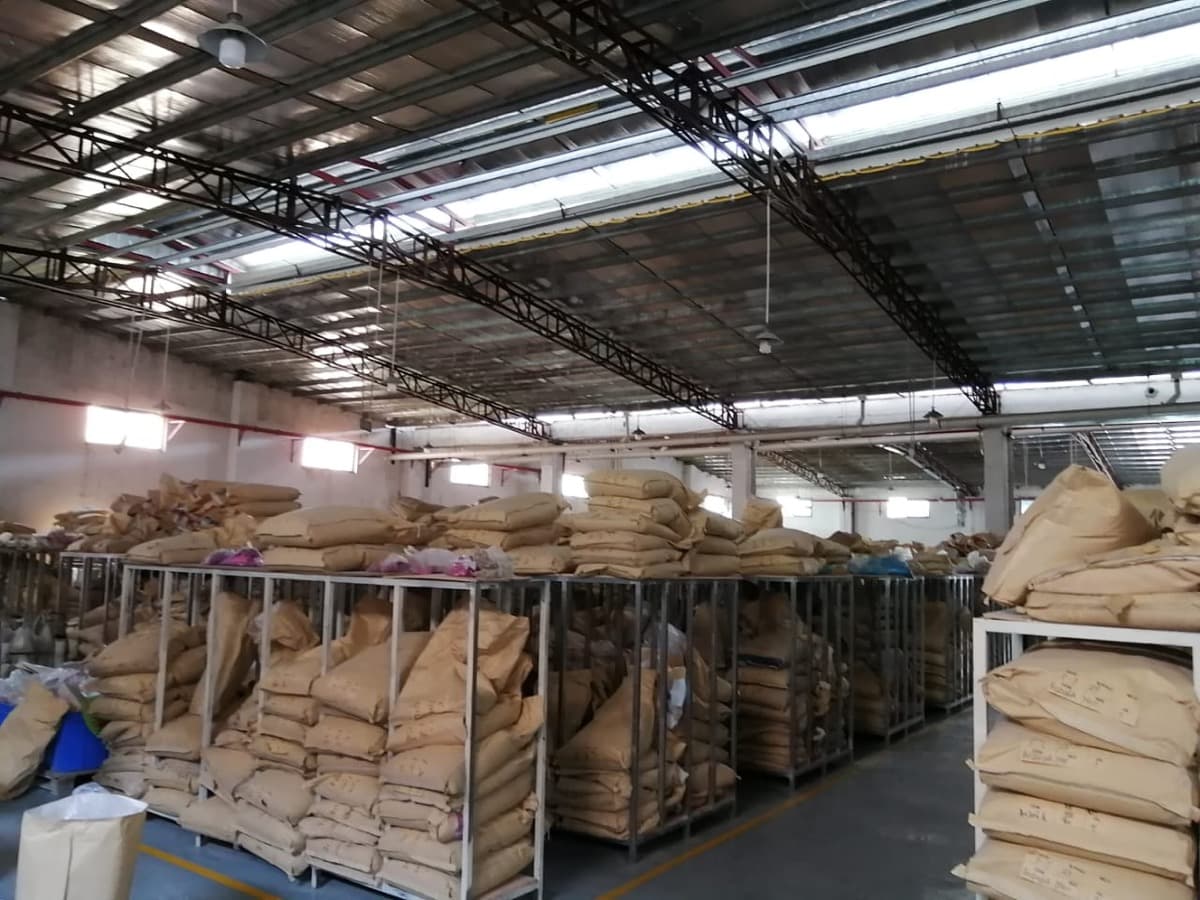
Let me skip the preamble. You have a legacy SKU — maybe a body gel, maybe a pressed highlighter, maybe a nail lacquer — loaded with conventional PET glitter that sparkles exactly the way your brand owner wants. Now procurement or regulatory tells you to switch to biodegradable. You pull three supplier samples. None of them look right. One bleeds dye into your butyl acetate nail base within 72 hours. Another curls and loses reflectance in your 85°C lip balm pour. The third settles out of your low-viscosity body gel before QC even signs off on stability.
This is the daily reality of executing a sample match — biodegradable glitter for cosmetic formulation in US product lines. The aesthetic target is fixed by marketing. The regulatory window is closing. And the substrate chemistry between PET and regenerated cellulose is different enough that a direct drop-in swap almost never works on the first attempt.
I run formulation development and materials QC at MLM Pigments in Shenzhen. We manufacture cosmetic-grade biodegradable glitter and ship roughly 40% of our output to US brand labs and contract manufacturers. What follows is the technical framework we use internally — and share with our customers' chemists — to close the gap between a PET reference standard and a biodegradable production match.
Conventional cosmetic glitter starts with biaxially-oriented PET film (BOPET). The biaxial orientation process stretches the film in both machine and transverse directions, producing a highly crystalline structure (typically 35–45% crystallinity by DSC) with excellent optical clarity (haze < 2.0% per ASTM D1003) and mechanical toughness. The film is vacuum-metallised with aluminium at ~40–80 nm thickness, then coated with colorant layers — usually cross-linked polyurethane carrying organic lakes or iron oxides. The finished laminate is slit on rotary knife arrays into hexagonal or square particles.
Key properties that formulators take for granted with PET:
The dominant biodegradable alternative uses modified regenerated cellulose (MRC) sourced from eucalyptus or mixed hardwood dissolving pulp. The cellulose is cast into film, plasticised (commonly with glycerol or polyethylene glycol at 8–15 wt%), and then metallised and colour-coated in a similar laminate stack.
But the substrate behaves differently in every axis that matters to a formulator:
Our engineering response at MLM Pigments targets each of these failure modes at the laminate design stage, before the glitter ever reaches your bench.
We qualify every biodegradable glitter batch through a thermal soak protocol:
Our current MRC-based glitters — the ones we ship for lip balm, stick highlighter, and wax-melt applications — pass both tests. The cross-linked polyurethane overcoat and optimised plasticiser package keep the cellulose film dimensionally stable through short-duration exposures up to 160–200°C. But I want to be direct: sustained hold above 170°C for more than 45 minutes will start to yellow the cellulose. If your process requires that kind of dwell time, we need to discuss synthetic fluorphlogopite substrates instead.
We run 28-day immersion panels in the five solvent systems most common in US cosmetic manufacturing:
| Solvent System | Conditions | Pass Criteria | MLM Bio-Glitter Result |
|---|---|---|---|
| Ethyl Acetate (neat) | 25°C, 28 days, sealed vial | No dye migration visible; ΔE < 2.0 on recovered particles | Pass |
| Butyl Acetate (neat) | 25°C, 28 days, sealed vial | No dye migration; no film swelling > 5% linear | Pass |
| Isopropanol 70% aq. | 25°C, 28 days | No dye bleed; no haze increase > 3% (ASTM D1003) | Pass |
| Propylene Glycol / Water 30:70 | 25°C, 28 days | No softening; no sedimentation rate increase > 10% vs T0 | Pass |
| Dimethicone (5 cSt) | 40°C, 14 days | No colour transfer to silicone phase | Pass |
Every CoA we ship includes a solvent resistance statement referencing the specific panel relevant to the customer's declared vehicle. If you are formulating in a solvent system not listed here — say, cyclomethicone blends or volatile alkanes for spray applications — send us 200 mL of your base and we will run a custom immersion panel at no charge during the sample match phase.
This is the table our applications lab uses when a US customer sends a brief. It tells you where our biodegradable glitters drop in without drama and where you need to adjust your formula.
| Product Type | Vehicle Chemistry | Viscosity Range (Brookfield RVT, 25°C) | Bio-Glitter Compatibility | Formulation Adjustments Required |
|---|---|---|---|---|
| Nail Lacquer | Butyl acetate / ethyl acetate / nitrocellulose | 80–200 cP | ✅ High — solvent-stable coating required | Confirm anti-settling agent (e.g., stearalkonium hectorite at 1.5–2.5 wt%). Verify no dye migration at 28-day shelf. |
| Body Gel (aqueous) | Carbomer / water / glycerin | 15,000–45,000 cP | ✅ High | Yield stress typically sufficient for suspension. Verify at 40°C/75% RH accelerated stability. |
| Pressed Eyeshadow | Talc / mica / binder (dimethicone, mineral oil) | N/A (dry blend) | ✅ High | Electrostatic clumping possible in powder hopper if RH < 25%. Ground hopper or add 0.3% fumed silica to blend. |
| Lip Balm / Stick | Beeswax / cetyl alcohol / oils, hot-pour 80–90°C | N/A (molten pour) | ✅ Moderate-High | Keep pour temp ≤ 90°C. Stir gently — high-shear rotor-stator above 15 m/s tip speed can fracture cellulose particles. Use anchor stirrer at 60–120 rpm. |
| Body Lotion (O/W emulsion) | Cetearyl alcohol / polysorbate / water | 3,000–12,000 cP | ⚠️ Moderate | Sedimentation risk if viscosity < 8,000 cP. Add 0.3–0.5% xanthan gum or Acrylates/C10-30 Alkyl Acrylate Crosspolymer to build yield stress above 2.5 Pa. |
| Spray / Mist (hydro-alcoholic) | SD Alcohol 40-B / water | 1–5 cP | ⚠️ Low without engineering | Particles will settle immediately. Requires shaking instruction on label. Verify dye stability in ethanol at 70% concentration. |
Every production lot is tested on our Agilent 7800 ICP-MS following acid digestion (HNO₃/H₂O₂ microwave, EPA 3052-equivalent). Release limits we hold to — and print on every CoA:
These limits align with US FDA guidance for cosmetic-grade colorants and with Health Canada's Hot List thresholds. If your toxicologist requires tighter limits for a specific retailer (some US big-box chains demand Pb < 1 ppm), flag this at the sample request stage and we will select metallisation and pigment lots accordingly.
We run ATR-FTIR (Thermo Nicolet iS50) on every incoming cellulose film lot and on finished glitter. The spectrum serves two purposes:
We include FTIR overlay plots (sample vs. reference) in our technical dossier upon request. This is particularly useful for US brands filing MoCRA safety substantiation packages — your qualified safety assessor can reference our raw material identity confirmation without needing to re-run the analysis.
A failure mode that rarely appears in supplier marketing but shows up on your production floor: burrs from worn slitting knives. When rotary die-cut knives dull after 800–1200 linear metres of film, the cut edges develop micro-burrs — ragged cellulose fibres that increase electrostatic charge, promote clumping in powder hopper feeds, and create a rough mouthfeel in lip products. We change knife sets on a fixed schedule and run SEM spot-checks (JEOL JSM-IT500, 200× magnification) on cut-edge quality every 500 kg of production. If you have experienced clumping issues with other suppliers' biodegradable glitters, this is often the root cause.
When you receive a 1 kg sample match from us, here is the protocol we recommend before committing to a production-scale order. This is the same sequence our own applications chemists run.
Regulatory boundary statement: MLM Pigments supplies cosmetic raw materials and provides batch test documentation (CoA, ICP-MS, FTIR, biodegradation summaries) upon request to support brand filings. We hold US FDA MoCRA facility registration for our Shenzhen manufacturing site. Finished formulation safety assessment, product safety substantiation, and regulatory filings remain the responsibility of the brand owner and their qualified safety assessor.
To request a sample match, contact our technical sales team through mlmpigments.com or visit our biodegradable glitter product page at Cosmetic Grade Biodegradable Glitter. Send us your legacy PET glitter reference (physical sample or detailed spec sheet with colour coordinates, particle size, and target vehicle) and we will return a matched biodegradable sample with full documentation.
| Parameter | Conventional PET Glitter | MLM Regenerated Cellulose Bio-Glitter | MLM Synthetic Fluorphlogopite Bio-Glitter |
|---|---|---|---|
| Substrate | BOPET film, 12–23 µm | Modified regenerated cellulose (eucalyptus pulp), 20–30 µm | Synthetic fluorphlogopite (synthetic mica), 15–40 µm |
| Specific Gravity | ~1.38 g/cm³ | ~1.42–1.50 g/cm³ | ~2.7–2.9 g/cm³ |
| Thermal Stability (short-term) | > 250°C | 160–200°C (30 min) | > 800°C |
| Solvent Resistance (EA/BA) | Excellent | Excellent (with PU cross-linked coating) | Excellent |
| Biodegradation (ISO 14851) | Not biodegradable | > 60% in 56 days (freshwater) | Mineral — not applicable (not a microplastic) |
| EU Annex XVII Microplastic Status | Restricted (transition period applies) | Exempt (natural polymer) | Exempt (mineral, not a polymer) |
| Heavy Metals (Pb, ICP-MS) | Varies by supplier | < 2 ppm (MLM spec) | < 2 ppm (MLM spec) |
| Available Cuts | Hex, square, mixed shapes, 0.05–3.0 mm | Hex, 0.05–3.0 mm | Hex, 0.1–2.0 mm |
| Haze (ASTM D1003, on film) | < 2.0% | < 5.0% | N/A (opaque substrate) |
| Recommended Use Cases | All (where permitted) | Lip, eye, face, body, nail | Eye, face, body (higher SG limits nail/gel suspension) |
Some US brands — particularly those selling into both US and EU markets — are evaluating synthetic fluorphlogopite (synthetic mica) glitter as a microplastic-free alternative that sidesteps the biodegradation question entirely. Because synthetic mica is an inorganic mineral, it falls outside the polymer definition in EU 2023/2055 altogether.
The trade-off: specific gravity is roughly 2.8 g/cm³, nearly double that of cellulose. Suspension in anything below 25,000 cP is impractical without aggressive rheology modification. But for pressed powders, baked highlighters, and anhydrous stick formats, synthetic mica glitter gives you PET-level sparkle, unlimited thermal headroom, and zero microplastic classification risk. We manufacture both substrates on the same Shenzhen site and can provide matched colour sets across cellulose and synthetic mica for formulators who need platform flexibility across product categories.
Based on our project history with US indie brands and mid-size contract manufacturers:
Total timeline from first enquiry to production material on your dock: 8–12 weeks. This is not fast by e-commerce standards. It is fast by the standards of getting a biodegradable glitter to actually perform identically to PET in a real formulation, pass accelerated stability, and carry documentation your toxicologist will accept.
Technical questions on biodegradable glitter sample matching, ICP-MS documentation, or formulation compatibility can be directed to MLM Pigments' applications engineering team via mlmpigments.com.
Disclaimer: Technical data and regulatory references provided herein (including EU Regulation 2023/2055, EU Regulation 1223/2009, and US FDA MoCRA) are based on current legislative texts and laboratory test parameters for raw materials manufactured by MLM Pigments. This documentation is intended solely to support independent brand formulators and Responsible Persons in compiling their Cosmetic Product Safety Reports (CPSR) and product filings. Final formulation compliance, toxicological risk assessment, and finished product registration remain the responsibility of the brand owner.
Looking for custom formulation or laboratory testing samples? Contact our MLM Pigments technical engineering team or request a free sample kit directly.
Target Formulation Material:
Biodegradable Glitter Sample Matching for US Cosmetic Formulation
Includes 50g sealed lab pouch, lot-specific COA, Technical Data Sheet (TDS), and ISO 22716 regulatory package.
Whether formulating eyeshadow palettes, lip glosses, nail polishes, or compounding industrial epoxy resin, start with our 1kg low trial MOQ or complimentary 50g qualification sample with complete TDS and batch COA.