
Loading...
⚡ 1kg Low MOQ · Factory Direct Glitter & Mica⚡ Source Factory Direct Wholesale · Custom Loose Glitter & Mica Pigments · 1kg Low Trial MOQ · 48h Free 50g Lab Samples
mlmcustom@mlmcosmetic.com⚡ 1kg Low MOQ · Factory Direct Glitter & Mica⚡ Source Factory Direct Wholesale · Custom Loose Glitter & Mica Pigments · 1kg Low Trial MOQ · 48h Free 50g Lab Samples
mlmcustom@mlmcosmetic.comLoading...
SKU-specific compliance specification guide for holographic glitter sample matching. ICP-MS limits, BOPET film specs, solvent resistance data, and EU/US regulatory docs.
Last quarter, a European indie nail brand sent us a competitor's holographic glitter sample — a 0.2mm hex-cut, high-chroma rainbow shift — and asked us to match it for a 500-unit pilot run. We matched the optical profile within two days. The trouble started on day four of their stability hold: the aluminium vapor-deposition layer delaminated in their butyl acetate–heavy lacquer base, turning the entire batch into a murky grey-green suspension with visible metallic sediment.
The root cause wasn't the optical match. It was a documentation gap. The original supplier's Certificate of Analysis listed only particle size and color index. No solvent immersion data. No BOPET film crystallinity spec. No ICP-MS panel. The brand's formulator had zero technical basis to predict that the glitter's acrylic overcoat would fail in a high-solvency system.
This guide exists because that failure mode is not rare — it is the default outcome when procurement teams treat holographic glitter as a commodity line item rather than a precision optical-chemical composite. We wrote it for the chemist running benchtop stability, the toxicologist reviewing the CPSR dossier, and the procurement director who needs to know exactly which documents to demand before signing a PO.
MLM Pigments supplies cosmetic raw materials and provides batch-level test documentation (CoA, ICP-MS reports, FTIR spectral fingerprints) upon request to support brand regulatory filings. Finished formulation safety assessment remains the sole responsibility of the brand owner's qualified safety assessor under EU Regulation 1223/2009 or the responsible person designated under US FDA MoCRA.
A holographic glitter particle is not a single material. It is a laminated optical stack, and every layer has a failure mode.
| Layer (bottom to top) | Material | Function | Primary Failure Mode |
|---|---|---|---|
| Carrier film | BOPET (biaxially-oriented PET), Regenerated Cellulose, or Synthetic Fluorophlogopite | Structural substrate; carries embossed diffraction grating | PET: microplastic restriction (EU 2023/2055). Cellulose: moisture uptake causes edge curl above 75% RH. Syn-mica: brittle fracture during rotary slitting if blade clearance > 15µm. |
| Diffraction grating | Micro-embossed pattern, 1,400–2,000 lines/mm | Generates rainbow spectral decomposition via constructive interference | Grating pitch variance > ±50 lines/mm shifts dominant hue by 15–25nm — enough to fail a visual match panel. |
| Reflective layer | Vacuum-deposited aluminium, ~40–80nm thickness | Mirror surface for maximum diffraction efficiency | Solvent penetration through compromised topcoat dissolves Al layer. Visible as grey haze and metallic sediment in suspension. |
| Colorant layer (optional) | Epoxy or acrylic resin dyed with CI-listed colorants (e.g., CI 77891 TiO₂, CI 15850 D&C Red No. 7) | Tints the holographic base; creates colored-shift effects | Dye migration into polar solvent systems. Particularly aggressive in ethyl acetate above 35°C. |
| Protective topcoat | Cross-linked melamine-formaldehyde or UV-cured acrylate | Solvent barrier; mechanical protection during mixing shear | Single-layer acrylic coats fail in < 72 hours in butyl acetate immersion. Dual-cure (thermal + UV) cross-linked coats survive 30+ days. |
The carrier film's crystallinity percentage directly controls thermal distortion onset. Standard packaging-grade BOPET runs around 35–42% crystallinity. Cosmetic-grade holographic film needs ≥ 48% crystallinity (measured via DSC per ASTM E794) to survive hot-pour applications at 160°C without edge curling or geometric distortion.
When you request a sample match, ask for the film supplier's DSC thermogram or at minimum the crystallinity percentage. If the sales team cannot provide it, that is a red flag — they are likely reselling commodity packaging film that was never engineered for cosmetic thermal processing.
Particle geometry is produced by rotary slitting knives (for hex and square cuts) or flatbed die-cutting (for custom shapes). Worn slitting blades produce micro-burrs along cut edges — typically 5–15µm protrusions visible under 40× magnification. These burrs cause two downstream problems:
| Substrate | Onset of Geometric Distortion (°C) | Maximum Recommended Process Temp (°C) | Test Method |
|---|---|---|---|
| BOPET (≥ 48% crystallinity) | 175 | 160 | Hot-stage microscopy, 5°C/min ramp |
| Regenerated Cellulose | 155 | 140 | Hot-stage microscopy, 5°C/min ramp |
| Synthetic Fluorophlogopite stack | 280 | 200 | TGA onset per ASTM E1131 |
For hot-pour lip balm and stick formulations, synthetic fluorophlogopite-based holographic pigments are the only substrate that survives direct contact with molten wax blends above 165°C without measurable particle curl. PET-based glitters can work in these systems only if the pour temperature is tightly controlled below 160°C and contact time with the molten phase is under 90 seconds before cooling onset.
We immerse 0.5g of glitter in 20mL of neat solvent in a sealed borosilicate vial at 25°C ± 2°C. Visual inspection at 24h, 72h, 7 days, 14 days, and 30 days under D65 standardized lighting. Pass criteria:
| Solvent System | Solvent-Resistant PET Glitter (Dual-Cure Coat) | Standard PET Glitter (Single Acrylic Coat) | Cellulose-Based Eco Glitter |
|---|---|---|---|
| Ethyl Acetate (neat) | PASS 30 days | FAIL 48–72 hours | PASS 30 days (cellulose-specific coat) |
| Butyl Acetate (neat) | PASS 30 days | FAIL 24–48 hours | PASS 30 days |
| Isopropyl Alcohol | PASS 30 days | PASS 30 days | PASS 30 days |
| Water/Glycerin (70:30) | PASS 30 days | PASS 30 days | PASS 14 days — monitor edge swell |
| Nitrocellulose suspension (standard nail base) | PASS 30 days | FAIL 72 hours | PASS 30 days |
| Dimethicone (350 cSt) | PASS 30 days | PASS 30 days | PASS 30 days |
If you are formulating nail lacquers — and roughly 40% of holographic glitter volume goes into nail — do not use standard-coat PET glitter. Full stop. Insist on solvent-resistant grade with dual-cure cross-linked topcoat, and verify with the supplier's own immersion test report referencing the specific SKU and lot number you are purchasing.
| Product Type | Recommended Substrate | Max Particle Size | Min Viscosity / Yield Stress | Key Risk | MLM SKU Category |
|---|---|---|---|---|---|
| Nail Lacquer (solvent-based) | Solvent-Resistant BOPET | 1.0mm | N/A (self-leveling film) | Al delamination if coat spec is wrong | Solvent Resistant Glitter |
| Gel Nail (UV-cure) | Solvent-Resistant BOPET | 0.5mm | Gel viscosity > 8,000 cP (Brookfield RVT, spindle #6, 20 rpm, 25°C) | Particle settling before cure if viscosity too low | Solvent Resistant Glitter |
| Lip Gloss (anhydrous oil) | BOPET or Syn-Mica | 0.15mm max for lip-safe texture | τ₀ > 3 Pa | Gritty mouthfeel above 0.2mm; settling in low-viscosity oils | Holographic Glitter |
| Pressed Eyeshadow | BOPET or Syn-Mica | 0.2mm | N/A (dry press) | Electrostatic clumping in hopper; uneven distribution | Holographic Glitter |
| Body Lotion / Gel (rinse-off or leave-on EU) | Regenerated Cellulose (EU leave-on) or BOPET (rinse-off with transition period) | 0.3mm | τ₀ > 5 Pa for suspension stability | EU microplastic compliance; settling in thin emulsions | Biodegradable Glitter |
| Hot-Pour Lip Balm / Stick | Synthetic Fluorophlogopite | 0.15mm | N/A (molten pour) | Particle curl if pour temp > substrate limit | Syn-Mica Effect Pigments |
When you submit a sample match request — or when you reorder an existing SKU — request the following current, lot-specific documents. Not generic product-line datasheets. Lot-specific.
Certificate of Analysis (CoA) — Must reference the specific production lot number and include:
ICP-MS Heavy Metal Panel — Run on Agilent 7800 ICP-MS (or equivalent validated instrument) per lot:
FTIR Spectral Fingerprint — ATR-FTIR scan (4000–400 cm⁻¹, 4 cm⁻¹ resolution) of the finished glitter particle. This serves two functions:
Solvent Immersion Test Report — Per the protocol described above, specific to the SKU's declared solvent resistance grade.
Haze & Optical Clarity (for transparent-substrate SKUs): ASTM D1003 haze measurement on the carrier film prior to metallization. Haze > 4% on the base film correlates with reduced diffraction efficiency and a "milky" holographic effect rather than a crisp rainbow shift.
Regulatory Substrate Declaration — Written confirmation of whether the substrate is PET, regenerated cellulose, or synthetic fluorophlogopite, with reference to EU Regulation 2023/2055 (REACH Annex XVII, Entry 78) microplastic classification status.
Commission Regulation (EU) 2023/2055 restricts placing on the market synthetic polymer microparticles < 5mm in products where release to the environment is foreseeable. For leave-on cosmetic products containing conventional PET glitter, the transition deadline is October 2027 (with specific conditions). Rinse-off products face earlier restrictions.
Practical impact for your procurement timeline: if you are developing leave-on formulations for EU markets launching in 2026 or later, specify regenerated cellulose or synthetic fluorophlogopite substrates now. Do not wait for the deadline. Reformulation qualification takes 6–12 months when you account for stability testing, CPSR amendment, and packaging artwork updates.
MLM Pigments provides substrate classification declarations and, for cellulose-based SKUs, can supply OECD 301B aerobic biodegradation test summaries upon request.
MoCRA requires cosmetic product facility registration and adverse event reporting but does not mandate pre-market approval for cosmetic ingredients (color additives excepted). However, MoCRA does require that responsible persons maintain adequate substantiation of safety.
For holographic glitters, this means:
MLM Pigments maintains facility registration documentation and provides batch-specific test reports to support your compliance files. We do not perform finished product safety assessments — that is your qualified person's responsibility.
Only after all three steps pass should you issue a purchase order for bulk production quantities.
For sample match requests, send your target sample (minimum 5g) along with the following information:
Our formulation support team will return a matched sample with full documentation within the lead times above.
Holographic glitter sample matching fails when it is treated as a visual exercise. The optical match is the easy part. The hard part — the part that determines whether your production batch ships or gets scrapped — is substrate architecture verification, solvent compatibility validation, and lot-specific documentation.
Request current SKU-specific documents for every lot. Not product-line generics. Not last year's CoA. The current lot's ICP-MS panel, FTIR fingerprint, and solvent immersion report.
Verify the substrate type against your regulatory market requirements before you finalize the formula, not after your CPSR assessor flags it.
Run the three-step benchtop protocol on every new supplier and every new SKU — including from suppliers you trust. Film converter changes, slitting blade wear, and coating reformulations happen without notice in this supply chain.
MLM Pigments provides the raw material, the batch documentation, and the technical support to help you qualify it. The formulation and safety assessment are yours. That division of responsibility is not a disclaimer — it is how compliant supply chains actually function.
For sample match requests or SKU-specific document packages, contact our technical team through mlmpigments.com.
Disclaimer: Technical data and regulatory references provided herein (including EU Regulation 2023/2055, EU Regulation 1223/2009, and US FDA MoCRA) are based on current legislative texts and laboratory test parameters for raw materials manufactured by MLM Pigments. This documentation is intended solely to support independent brand formulators and Responsible Persons in compiling their Cosmetic Product Safety Reports (CPSR) and product filings. Final formulation compliance, toxicological risk assessment, and finished product registration remain the responsibility of the brand owner.
Looking for custom formulation or laboratory testing samples? Contact our MLM Pigments technical engineering team or request a free sample kit directly.
Target Formulation Material:
Holographic Glitter Sample Match: SKU Compliance Spec Guide
Includes 50g sealed lab pouch, lot-specific COA, Technical Data Sheet (TDS), and ISO 22716 regulatory package.
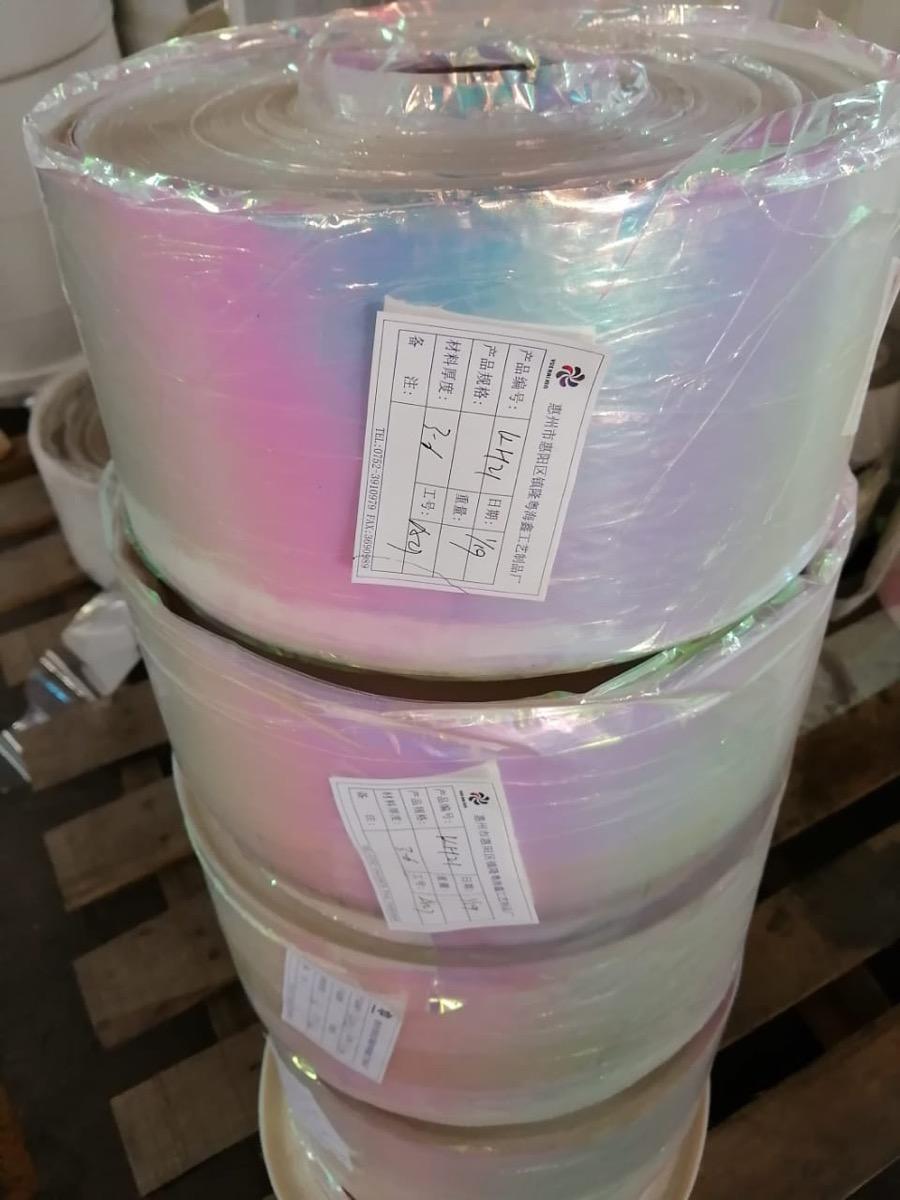
Whether formulating eyeshadow palettes, lip glosses, nail polishes, or compounding industrial epoxy resin, start with our 1kg low trial MOQ or complimentary 50g qualification sample with complete TDS and batch COA.