
Loading...
⚡ 1kg Low MOQ · Factory Direct Glitter & Mica⚡ Source Factory Direct Wholesale · Custom Loose Glitter & Mica Pigments · 1kg Low Trial MOQ · 48h Free 50g Lab Samples
mlmcustom@mlmcosmetic.com⚡ 1kg Low MOQ · Factory Direct Glitter & Mica⚡ Source Factory Direct Wholesale · Custom Loose Glitter & Mica Pigments · 1kg Low Trial MOQ · 48h Free 50g Lab Samples
mlmcustom@mlmcosmetic.comLoading...
10 technical formulator Q&As on EU 2023/2055 microplastics rules, regenerated plant-cellulose glitter pH/water stability, 100°C thermal limit, OECD 301B/ISO 14855 test evidence, and MOQ.
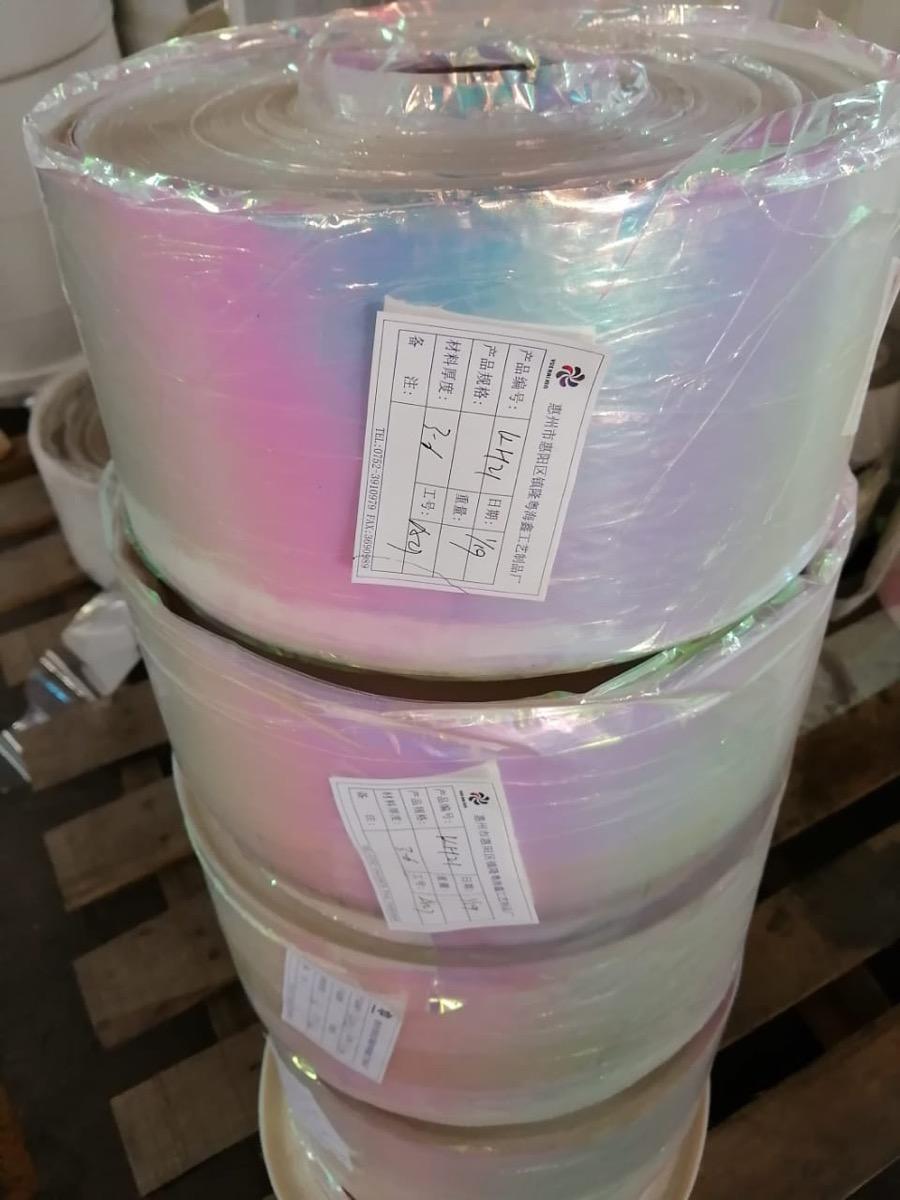
Commission Regulation (EU) 2023/2055, amending REACH Annex XVII Entry 78, imposes phased restrictions on intentionally added synthetic polymer microparticles across cosmetic categories, forcing formulators to evaluate regenerated plant cellulose glitter as a structurally and chemically distinct substrate—not a drop-in replacement. Eucalyptus-derived viscose rayon core glitter carries fundamentally different density, swelling behavior, thermal ceiling, and solvent sensitivity profiles compared to biaxially oriented polyethylene terephthalate (BOPET) film, demanding formulation-specific engineering rather than simple material substitution.
Entry 78 of REACH Annex XVII, as amended by (EU) 2023/2055, restricts the placing on the market and use of synthetic polymer microparticles—defined as solid polymer particles ≤ 5 mm in any dimension—in a broad range of products including cosmetics. The regulation does not categorically exempt all "biodegradable" glitter; instead, it establishes a technical biodegradability threshold under Group 4 criteria, requiring documented evidence of aerobic and/or anaerobic biodegradation at defined pass rates within specified timeframes. Regenerated cellulose (viscose/rayon) is explicitly excluded from the polymer definition under certain conditions, but eligibility depends on the exact polymer composition of every coating, adhesive layer, and pigment binder applied to the cellulose core—not the core substrate alone.
Formulators and brand owners must verify each SKU's full material declaration, including any metallic vacuum-deposited layers, UV-cured lacquer coatings, or acrylate binders, against the Group 4 biodegradability pass criteria before assuming regulatory exclusion. Uncoated regenerated cellulose cores typically satisfy the exclusion, but multi-layer constructions require lot-specific polymer composition documentation and, where coatings are present, OECD 301B or EN ISO 14855 test evidence demonstrating ≥ 60% biodegradation within 28 days (OECD 301B) or equivalent.
| Cosmetic Category | Restriction Effective Date | Key Formulator Action Required |
|---|---|---|
| Loose cosmetic glitter (retail/professional) | 17 October 2023 | Immediate: Verify polymer composition of all glitter SKUs; obtain Group 4 biodegradability test evidence (OECD 301B / EN ISO 14855) or confirm cellulose-core exclusion documentation per lot |
| Rinse-off cosmetics (body wash, shampoo, scrubs) | 16 October 2027 | Transition window: Audit formulation portfolio; request full polymer stack declarations from suppliers; initiate CPNP/SCPN re-notification if glitter grade changes |
| Leave-on cosmetics (body lotion, face cream, hair serum) | 16 October 2029 | Begin substitution trials now; stability data for cellulose glitter in emulsion systems requires 12–18 months accelerated aging |
| Lip, nail & makeup products (lipstick, nail polish, foundation, eyeshadow) | 16 October 2035 | Longest runway, but solvent and thermal compatibility challenges for cellulose glitter in these categories are most severe; early R&D investment recommended |
Critical note: Category assignment, biodegradability pass criteria, and polymer exclusion eligibility must be verified against the exact SKU documentation and lot-specific COA for every production batch. Category-wide exemption assumptions are not supported by the regulation text. Consult a qualified regulatory toxicologist and verify regional colorant eligibility per exact SKU before CPNP or UK SCPN filing.
| Parameter | Regenerated Plant Cellulose (Eucalyptus Rayon Core) | Cosmetic-Grade BOPET (Polyester) | Formulator Implication |
|---|---|---|---|
| Core density | ~1.50 g/cm³ | ~1.38 g/cm³ | Cellulose settles ~8–9% faster in low-viscosity oils; requires higher HEC/carbomer loading or rheology modifier adjustment |
| Thermal ceiling (processing) | ≤ 100°C (sustained); ≤ 105°C (brief spike) | 160–180°C | Cellulose glitter incompatible with standard hot-pour lip balm at 85–95°C only if pour temp is tightly controlled; wax stick formulas above 100°C risk core deformation |
| pH stability window | 4.5–8.5 | 3.0–11.0 | Cellulose degrades in strongly acidic (pH < 4.5) or alkaline (pH > 8.5) matrices; AHA toners, high-pH soap bases require grade-specific coating verification |
| High-water gel swelling risk | Moderate–High (uncoated); Low–Moderate (cross-linked shellac or acrylate-coated) | Negligible | In gels with > 50% free water, uncoated cellulose absorbs moisture, causing flake softening, edge blurring, and color bleed; coating selection is critical |
| Coating integrity in aqueous systems | Requires cross-linked shellac, ethylcellulose, or radiation-cured acrylate barrier | N/A (inherently hydrophobic) | Coating must maintain ≥ 95% film continuity after 24h immersion at 40°C; request immersion test data from supplier |
| Nail solvent suitability (butyl/ethyl acetate, IPA) | Generally not recommended without solvent-resistant coating; standard rayon swells in acetate esters | Excellent | Cellulose glitter in nail lacquer requires specialized solvent-barrier coating; verify dissolution resistance per ASTM D543 or equivalent |
| Moisture-barrier packaging requirement | MVTR < 0.5 g/m²/day mandatory | Recommended but less critical | Hygroscopic cellulose core absorbs ambient humidity, causing clumping, coating delamination, and color shift; foil pouch storage is non-negotiable |
| Delta E color control tolerance | ≤ 0.8 (Konica Minolta spectrophotometer) | ≤ 0.8 | Same spectrophotometric standard applied; cellulose substrate optical scatter differs from PET, requiring separate color matching baseline |
Q1: Does EU 2023/2055 automatically exempt all "biodegradable" glitter from REACH Annex XVII Entry 78 restrictions?
No. The regulation excludes particles where the polymer meets specific natural polymer criteria or passes Group 4 biodegradability thresholds, but this exclusion applies to the complete particle construction—core, coating, adhesive layer, and any deposited metallic film. A eucalyptus rayon core is typically excluded as regenerated cellulose, but if that core carries a UV-cured acrylate topcoat or a non-biodegradable aluminum vacuum deposit, the composite particle may not qualify for exclusion without supporting OECD 301B or EN ISO 14855 test evidence demonstrating ≥ 60% biodegradation within 28 days under aerobic aqueous conditions. Formulators must request full polymer stack declarations and lot-specific biodegradation test reports—not supplier marketing claims—before CPNP filing. Verify regional colorant eligibility per exact SKU.
Q2: Why does regenerated cellulose glitter soften or bleed in gels containing more than 50% water, and how does coating selection change this?
Uncoated or poorly coated cellulose is inherently hygroscopic; the amorphous regions of the rayon fiber network absorb free water, causing osmotic swelling of the flake cross-section by 8–15% depending on degree of polymerization (DP) and crystallinity index. This swelling disrupts the metallic or pigment coating layer, producing edge blurring and color migration into the gel matrix. Cross-linked shellac coatings (shellac + citric acid cross-linker, film thickness 0.8–1.2 µm) reduce water uptake by approximately 60–70% versus uncoated substrate. Radiation-cured acrylate coatings (UV or EB-cured, film thickness 0.5–1.0 µm, cross-link density > 80%) offer superior hydrolytic resistance but require biodegradability verification of the cured acrylate network per the Group 4 criteria discussed in Q1. Request 24-hour immersion test data at 40°C in a simulated gel matrix (2% carbomer, pH 6.0) before finalizing grade selection.
Q3: What is the maximum hot-pour temperature for cellulose glitter in lip balms and shimmer sticks?
The sustained thermal ceiling for eucalyptus rayon core glitter is 100°C; brief spikes to 105°C for < 60 seconds are generally tolerable without measurable core deformation, but coating integrity must be independently verified at that temperature. Standard anhydrous lip balm formulas (carnauba wax, candelilla wax, beeswax blends) are typically poured at 75–90°C—within the safe processing window. However, high-melt shimmer sticks using hydrogenated castor oil or synthetic wax blends poured at 95–100°C require strict thermocouple monitoring at the point of glitter addition, which should occur at the lowest possible pour temperature after the wax matrix has cooled from its processing peak. Never add cellulose glitter to a batch above 100°C; if your process requires higher temperatures, BOPET remains the appropriate substrate for that application.
Q4: Can plant-cellulose glitter replace BOPET in butyl acetate or ethyl acetate nail polish formulations?
Standard uncoated or shellac-coated cellulose glitter is not suitable for conventional nail lacquer systems. Butyl acetate (boiling point 126°C, Hildebrand solubility parameter ~8.5 MPa½) and ethyl acetate (boiling point 77°C, ~9.1 MPa½) are sufficiently polar to penetrate the cellulose fiber network, causing swelling, delamination of metallic coatings, and viscosity destabilization of the lacquer. Specialized solvent-barrier coatings—typically multi-layer ethylcellulose or radiation-cured systems with verified acetate-ester resistance per ASTM D543—can extend cellulose glitter utility into nail applications, but dissolution resistance data must be requested per lot. Until the EU 2035 deadline for nail products, BOPET remains the technically superior substrate for this category. Formulators developing next-generation nail products should initiate cellulose glitter R&D now to allow adequate stability and regulatory lead time.
Q5: How do density and flake flexibility affect settling viscosity requirements in body oils?
Cellulose glitter (core density ~1.50 g/cm³) settles faster than BOPET (~1.38 g/cm³) in low-viscosity carrier oils (dynamic viscosity 20–50 mPa·s). Using Stokes' Law as a first approximation for a 100 µm hexagonal flake, the settling velocity differential is approximately 8–10% higher for cellulose in a 30 mPa·s medium. To achieve equivalent suspension stability (target: < 2 mm sedimentation over 8 weeks at 25°C), formulators typically need to increase the rheology modifier loading by 0.3–0.8% w/w (e.g., hydrogenated castor oil, polyamide wax, or silica aerogel) relative to a BOPET-equivalent formula. Additionally, cellulose flakes exhibit higher flexibility and lower stiffness than BOPET, which reduces the tendency for flakes to align in shear flow—this can slightly reduce the characteristic sparkle intensity at low shear rates. Adjust flake particle size distribution (PSD) toward the 200–400 µm range to compensate for reduced optical stiffness.
Q6: Which OECD/ISO biodegradation test documentation should QA request before EU CPNP or UK SCPN filing?
For REACH Annex XVII Entry 78 Group 4 biodegradability exemption, QA should request: (a) OECD 301B (Ready Biodegradability: CO₂ Evolution Test) showing ≥ 60% theoretical CO₂ evolution within 28 days, or (b) EN ISO 14855-1 (Determination of ultimate aerobic biodegradability of plastic materials under controlled composting conditions) with equivalent pass thresholds. The test must be conducted on the complete glitter particle as supplied—not the isolated cellulose core—because coatings and metallic layers alter the biodegradation kinetics of the composite. Additionally, request the polymer composition declaration covering every layer (core, primer, metallic deposit, topcoat) with CAS numbers, molecular weight ranges, and cross-link density data. For UK SCPN filings, OPSS guidance currently mirrors the REACH Annex XVII approach; verify current UK REACH status with a UK-qualified regulatory consultant. See the EU Microplastics Compliance Hub and Germany / DACH ISO 14855 Guide for region-specific documentation checklists.
Q7: What heavy metal ICP-MS limits apply to biodegradable glitter, and how does MLM Pigments screen incoming material?
Cosmetic colorant heavy metal limits are governed by regional regulations (e.g., EU Regulation 1223/2009 Annex IV technical specifications, US 21 CFR Part 73/74 listing criteria, and national competent authority guidance). MLM Pigments screens all incoming glitter substrates and finished pigment blends using an in-house Agilent 7800 ICP-MS with EPA 3052 microwave acid digestion, applying internal screening limits of: Pb < 2 ppm, As < 1 ppm, Hg < 1 ppm, Cd < 1 ppm, Sb < 0.5 ppm. These limits are conservative relative to most regional cosmetic guidance thresholds and are applied per production lot. Lot-specific ICP-MS reports are available upon request with each shipment. Note that biodegradable glitter substrates—particularly those with natural mineral pigment coatings such as mica or iron oxides—may carry trace heavy metal backgrounds from the coating pigment itself; request coating-specific ICP-MS data in addition to composite particle data.
Q8: Why must hygroscopic cellulose glitter be stored in foil pouches with MVTR < 0.5 g/m²/day, and what happens if this is violated?
Regenerated cellulose has an equilibrium moisture content (EMC) of 11–14% at 65% RH / 23°C, compared to < 0.5% for BOPET. Exposure to ambient humidity above 55% RH causes progressive moisture absorption into the cellulose core, producing: (1) inter-particle hydrogen bonding leading to irreversible clumping (agglomeration); (2) coating delamination as the swelling core exerts radial stress on the barrier film; (3) color shift measurable as Delta E > 0.8 on Konica Minolta spectrophotometry due to altered optical path length in the swollen substrate; and (4) microbial proliferation risk in unpreserved bulk material held above 0.6 water activity. MLM Pigments packages all cellulose glitter in heat-sealed aluminum foil moisture-barrier pouches with MVTR < 0.5 g/m²/day, with nitrogen purge where applicable. Formulators must maintain this packaging integrity through their own warehouse and production environments; transfer to secondary containers must use equivalent moisture-barrier materials.
Q9: Can MLM Pigments custom-match existing PET holographic shades onto cellulose film substrates?
Yes, with important optical caveats. Holographic effects on BOPET are generated by embossed diffraction grating patterns in the PET film surface, which produce angle-dependent spectral dispersion. Cellulose film can accept similar embossed diffraction gratings, but the lower refractive index of cellulose (~1.47) versus PET (~1.57) reduces the angular dispersion intensity by approximately 15–25%, meaning a direct visual match to a PET holographic reference is not achievable at identical film thickness. MLM Pigments' color development team uses Konica Minolta multi-angle spectrophotometry (Delta E < 0.8 target across ≥ 3 measurement angles) to develop the closest achievable cellulose-substrate match, which may require adjusting flake particle size, coating pigment loading, or grating pitch. Custom holographic cellulose development requires a minimum 12-week lead time and a signed color development agreement. Submit reference PET samples and target application matrix details via Request Biodegradable Samples. Browse the current Biodegradable Cosmetic Glitter portfolio for standard holographic cellulose grades available for immediate sampling.
Q10: How do I qualify a 50g lab sample and progress to a 1 kg pilot trial MOQ?
Submit a qualification request via Request Biodegradable Samples or contact the technical sales team at mlmcustom@mlmcosmetic.com / WhatsApp +86 157 1218 6809. Specify: target application category (rinse-off, leave-on, lip, nail, loose), formulation matrix (aqueous gel, anhydrous wax, oil, solvent-based), processing temperature ceiling, pH range, and any existing PET reference shade. Complimentary 50g lab qualification samples are reviewed and dispatched within 48 hours of qualification approval, accompanied by the lot-specific COA, TDS, MSDS, and available ICP-MS screening data. Upon successful lab qualification—defined as passing your internal stability protocol (minimum 4-week accelerated aging at 40°C/75% RH recommended)—1 kg pilot trial orders are available in heat-sealed aluminum foil moisture-barrier pouches (MVTR < 0.5 g/m²/day). Scale-up to 25 kg UN-rated poly-lined fiber drums is available for production qualification. Document your stability data, ICP-MS results, and polymer composition declarations before initiating CPNP or UK SCPN notification.
This guide constitutes general technical reference information prepared by MLM Pigments (Shenzhen Meilianmei Technology Development Co., Ltd.) for formulator orientation purposes only. It does not constitute legal, regulatory, or toxicological advice. No content in this document replaces or supersedes: lot-specific Certificates of Analysis (COA), Technical Data Sheets (TDS), Material Safety Data Sheets (MSDS), ICP-MS heavy metal test reports, polymer composition declarations, or OECD 301B / EN ISO 14855 biodegradation test evidence specific to the exact SKU and production
Target Formulation Material:
EU (EU) 2023/2055 Biodegradable Cellulose Glitter Formulator FAQ: Stability, Solvents & Documentation
Includes 50g sealed lab pouch, lot-specific COA, Technical Data Sheet (TDS), and ISO 22716 regulatory package.
Whether formulating eyeshadow palettes, lip glosses, nail polishes, or compounding industrial epoxy resin, start with our 1kg low trial MOQ or complimentary 50g qualification sample with complete TDS and batch COA.