
Loading...
⚡ 1kg Low MOQ · Factory Direct Glitter & Mica⚡ Source Factory Direct Wholesale · Custom Loose Glitter & Mica Pigments · 1kg Low Trial MOQ · 48h Free 50g Lab Samples
mlmcustom@mlmcosmetic.com⚡ 1kg Low MOQ · Factory Direct Glitter & Mica⚡ Source Factory Direct Wholesale · Custom Loose Glitter & Mica Pigments · 1kg Low Trial MOQ · 48h Free 50g Lab Samples
mlmcustom@mlmcosmetic.comLoading...
B2B technical guide for custom cosmetic glitter formulations: particle specs, EU/FDA compliance, heavy metal limits, MOQ, lead times & solvent resistance data.
Published by the Technical Director, MLM Pigments OEM Factory, Shenzhen, China
For cosmetic brand formulators and procurement managers sourcing at scale, the phrase "cosmetic glitter" encompasses a surprisingly complex engineering discipline. Particle geometry, substrate chemistry, surface coating integrity, and regulatory status across three major jurisdictions can collectively determine whether a product launches on schedule or stalls in compliance review. This guide provides the mathematically grounded, regulation-aware framework that procurement teams and R&D leads need when evaluating custom cosmetic glitter formulations B2B.
If your team is currently navigating the EU microplastic restriction landscape or reconciling FDA MoCRA ingredient substantiation requirements with your existing raw material stack, the specification decisions made at the sourcing stage will prove decisive. For teams beginning their substrate evaluation, our Cosmetic Grade Biodegradable Glitter category provides a compliant starting reference across multiple particle geometries and substrate types.
Glitter particle size directly governs optical effect, skin adhesion, and regulatory classification. The industry-standard size nomenclature maps as follows:
| Mesh / Fraction | Approximate mm | Approximate inch | Primary Application |
|---|---|---|---|
| Extra Fine | 0.05 – 0.10 mm | ~1/512" – 1/256" | Eye shadow, lip gloss, serum |
| Fine | 0.10 – 0.20 mm | ~1/256" – 1/128" | Foundation, highlighter |
| Standard | 0.20 – 0.40 mm | 1/128" – 1/64" | Body lotion, nail lacquer |
| Medium | 0.40 – 1.0 mm | 1/64" – 1/32" | Nail art, body gel |
| Chunky | 1.0 – 3.0 mm | 1/32" – 1/8" | Festival/body cosmetics, hair products |
For eye-area applications under EU Regulation 1223/2009, formulators must confirm that glitter particles used in the periorbital zone are evaluated for ocular irritation potential. Particle shape (hexagonal vs. square cut vs. holographic) also influences both optical performance and the surface-area-to-mass ratio relevant to dermal exposure calculations.
Regenerated Cellulose (RC): Derived from plant-based sources (typically wood pulp), RC glitter is the substrate of choice for brands seeking compliance with the EU REACH Annex XVII microplastic restriction (discussed below). RC particles biodegrade under standard composting conditions and do not meet the synthetic polymer particle definition triggering restriction. Thermal stability is rated to 160°C, making RC suitable for most emulsion manufacturing processes but not for high-temperature anhydrous systems.
PET (Polyethylene Terephthalate): Conventional cosmetic glitter substrate offering the broadest color range, highest thermal stability (200°C), and superior solvent resistance in nail lacquer systems. PET glitter currently falls within the scope of EU REACH Annex XVII restrictions when used in wash-off products. Brand teams sourcing PET glitter must maintain documented evidence of product category (leave-on vs. rinse-off) and monitor the restriction phase-in schedule.
Synthetic Mica (Fluorphlogopite): A mineral-derived substrate offering intermediate biodegradability profile, excellent heat resistance (200°C), and strong compatibility with both aqueous and anhydrous systems. Synthetic mica avoids the child labor concerns historically associated with natural mica mining, supporting ESG procurement narratives. Confirm INCI listing (Fluorphlogopite) and CAS number (12003-38-2) on all technical data sheets.
Glitter performance in formulation depends heavily on the coating system applied to the substrate:
The European Chemicals Agency (ECHA) restriction on intentionally added microplastics (REACH Annex XVII, Entry 78) directly impacts PET and certain synthetic polymer-based glitters. Key compliance evidence requirements include:
The Modernization of Cosmetics Regulation Act (2022) strengthened FDA's authority over cosmetic ingredient safety. For glitter raw materials, substantiation requirements include:
Note: MoCRA does not constitute pre-market approval of cosmetic ingredients. "FDA compliance" in this context refers to adherence to MoCRA substantiation and listing requirements, not product-level approval.
All MLM Pigments glitter grades are batch-tested by ICP-MS (Inductively Coupled Plasma Mass Spectrometry) against the following limits, consistent with EU Cosmetics Regulation guidance and ISO 17294-2:
| Heavy Metal | Test Limit | Method |
|---|---|---|
| Lead (Pb) | < 2 ppm | ICP-MS, ISO 17294-2 |
| Arsenic (As) | < 1 ppm | ICP-MS, ISO 17294-2 |
| Mercury (Hg) | < 1 ppm | ICP-MS, ISO 17294-2 |
| Cadmium (Cd) | < 1 ppm | ICP-MS, ISO 17294-2 |
| Antimony (Sb) | < 5 ppm | ICP-MS, ISO 17294-2 |
Batch Certificates of Analysis (CoA) with ICP-MS results are provided as standard documentation with every commercial shipment.
Many B2B glitter procurement decisions are made on price and color range alone, leaving significant technical and compliance gaps that surface during formulation development or regulatory review. The three most common blind spots identified in our technical consultations are:
Glitter particles with density mismatches relative to the continuous phase (typically 1.0–1.4 g/cm³ for aqueous emulsions vs. 1.35–1.45 g/cm³ for PET glitter) will sediment over the product shelf life. Formulators frequently underestimate settling velocity differences between particle size grades. The Stokes' Law approximation for settling velocity (v = [2r²(ρ_p - ρ_f)g] / 9η) demonstrates that doubling particle radius increases settling rate fourfold. Mitigation strategies include rheology modification (carbomer, xanthan gum, HPMC at 0.3–0.8% w/w), density-matched substrate selection (RC glitter density ~1.27 g/cm³ offers closer matching to aqueous systems), or encapsulation in a pre-dispersed slurry format. MLM Pigments offers pre-dispersed glitter slurries in glycerin or propylene glycol carriers at 30–50% active loading to simplify incorporation.
Ethyl acetate and butyl acetate, the primary solvents in conventional nail lacquer, aggressively extract poorly anchored pigment coatings from glitter substrates. Suppliers who do not conduct immersion testing at 20–30% solvent concentration for minimum 72 hours before quoting "solvent resistant" grades are creating formulation risk for nail brand customers. Our internal protocol requires <2% ΔE color shift after 72-hour ethyl acetate immersion at 25°C as a pass criterion. Request this specific data point from any glitter supplier before committing to a nail lacquer formulation.
The EU REACH Annex XVII restriction has generated a wave of "biodegradable glitter" marketing claims, not all of which are substantiated by ISO-compliant test data. Specific blind spots include: (a) cellulose glitters with non-biodegradable coating layers that may still qualify as synthetic polymer particles under the restriction definition; (b) suppliers conflating "bio-based" feedstock origin with biodegradability (these are distinct properties); and (c) brands assuming that biodegradable substrate certification automatically resolves all regulatory obligations without reviewing product category phase-in timelines. Procurement teams should require ISO 14851 or OECD 301 test reports—not just supplier declarations—as part of their qualification documentation.
| Parameter | Regenerated Cellulose (RC) | PET Standard | Synthetic Mica |
|---|---|---|---|
| Particle size range | 0.05 – 1.0 mm | 0.05 – 3.0 mm | 0.05 – 2.0 mm |
| Density (g/cm³) | ~1.27 | ~1.38 | ~2.80 |
| Heat resistance | Up to 160°C | Up to 200°C | Up to 200°C |
| Ethyl acetate resistance | Good (topcoat dependent) | Excellent (<2% bleed, 72h) | Excellent (<1% bleed, 72h) |
| Aqueous/glycol resistance | Excellent | Good | Excellent |
| EU Annex XVII status | Compliant (biodegradable) | Restricted (rinse-off/phased) | Review required by grade |
| ICP-MS CoA included | Yes | Yes | Yes |
| MOQ (sample tier) | 1 kg | 1 kg | 1 kg |
| MOQ (commercial tier) | 25 kg | 25 kg | 25 kg |
| Lead time (stock colors) | 7–14 business days | 7–14 business days | 7–14 business days |
| Lead time (custom color) | 21–35 business days | 21–35 business days | 21–35 business days |
| Custom color tolerance | ΔE < 1.5 | ΔE < 1.5 | ΔE < 1.5 |
| Pre-dispersed slurry option | Yes (glycerin/PG carrier) | Yes (glycerin/PG carrier) | Yes (glycerin/PG carrier) |
| ESG/ethical sourcing note | Plant-based, biodegradable | Petroleum-derived | No child labor risk |
Q1: What is the minimum order quantity for custom cosmetic glitter formulations in B2B procurement?
For development and sampling purposes, MLM Pigments accepts orders from 1 kg per SKU, enabling formulation trials without large inventory commitment. Commercial production tiers begin at 25 kg per SKU, with volume pricing structures available from 100 kg upward. Custom color matching projects may require a development sample approval cycle (typically 2–3 rounds) before commercial production is released.
Q2: How do I confirm that a glitter grade is compliant with the EU REACH Annex XVII microplastic restriction for my specific product category?
Compliance determination requires three inputs: (1) confirmed substrate polymer identity and biodegradability test data (ISO 14851 or OECD 301), (2) your product's application category (rinse-off vs. leave-on, professional vs. consumer), and (3) the applicable phase-in date for your category under the restriction schedule. MLM Pigments provides a regulatory documentation package including substrate declaration, biodegradability data (for RC grades), and a compliance guidance memo for each grade. We recommend your regulatory affairs team or a qualified EU cosmetics safety assessor review this documentation in the context of your specific formulation.
Q3: What solvent resistance data should I request before specifying glitter for a nail lacquer formulation?
Request a 72-hour immersion test result in ethyl acetate and butyl acetate at 20–30% v/v concentration, with color measurement before and after (ΔE CIE Lab, D65/10°). Also request a stability assessment of the particle's physical integrity (no delamination, no substrate dissolution) post-immersion. For UV/LED gel systems, additionally request resistance data in HEMA (hydroxyethyl methacrylate) and urethane acrylate oligomer matrices.
Q4: How are heavy metal limits verified, and can I receive batch-specific ICP-MS data?
Yes. Every commercial batch shipped from MLM Pigments is accompanied by a Certificate of Analysis (CoA) that includes ICP-MS results for Pb, As, Hg, Cd, and Sb, tested to ISO 17294-2 methodology. Third-party laboratory verification is available on request for an additional fee. Our in-house ICP-MS capability allows accelerated turnaround for urgent batch release situations.
Q5: Can MLM Pigments develop a glitter grade matched to a specific Pantone or RAL color reference?
Yes. Our color matching service accepts Pantone Matching System (PMS), RAL, NCS, or physical reference sample inputs. Target tolerance is ΔE < 1.5 under D65 illuminant, 10° standard observer. The matching process typically requires 2–3 development rounds over 21–35 business days. A non-refundable color development fee applies for novel colorways; this fee is credited against the first commercial order exceeding 25 kg.
The technical and regulatory complexity surrounding custom cosmetic glitter formulations in 2024 and beyond demands a supplier relationship built on documented specifications, batch-level analytical data, and genuine regulatory literacy—not catalog descriptions. Whether your formulation challenge centers on EU microplastic compliance, nail lacquer solvent resistance, suspension stability in aqueous emulsions, or ethical sourcing documentation for ESG-aligned procurement, the specification decisions made at the raw material sourcing stage determine your downstream success.
For procurement managers building a qualified supplier list, or formulators requiring application-specific technical guidance, our Solvent Resistant Standard Glitter category provides detailed technical data sheets, application notes, and CoA examples to accelerate your qualification process.
MLM Pigments OEM Factory Shenzhen, China
Our technical team responds to B2B inquiries within one business day (GMT+8). Sample requests, specification sheets, regulatory documentation packages, and custom formulation consultations are available upon qualification. Please include your target application, approximate annual volume, and jurisdiction(s) of sale in your initial inquiry to enable the most precise technical response.
Disclaimer: Technical data and regulatory references provided herein (including EU Regulation 2023/2055, EU Regulation 1223/2009, and US FDA MoCRA) are based on current legislative texts and laboratory test parameters for raw materials manufactured by MLM Pigments. This documentation is intended solely to support independent brand formulators and Responsible Persons in compiling their Cosmetic Product Safety Reports (CPSR) and product filings. Final formulation compliance, toxicological risk assessment, and finished product registration remain the responsibility of the brand owner.
Looking for custom formulation or laboratory testing samples? Contact our MLM Pigments technical engineering team or request a free sample kit directly.
Target Formulation Material:
Custom Cosmetic Glitter Formulations B2B: Technical Guide
Includes 50g sealed lab pouch, lot-specific COA, Technical Data Sheet (TDS), and ISO 22716 regulatory package.
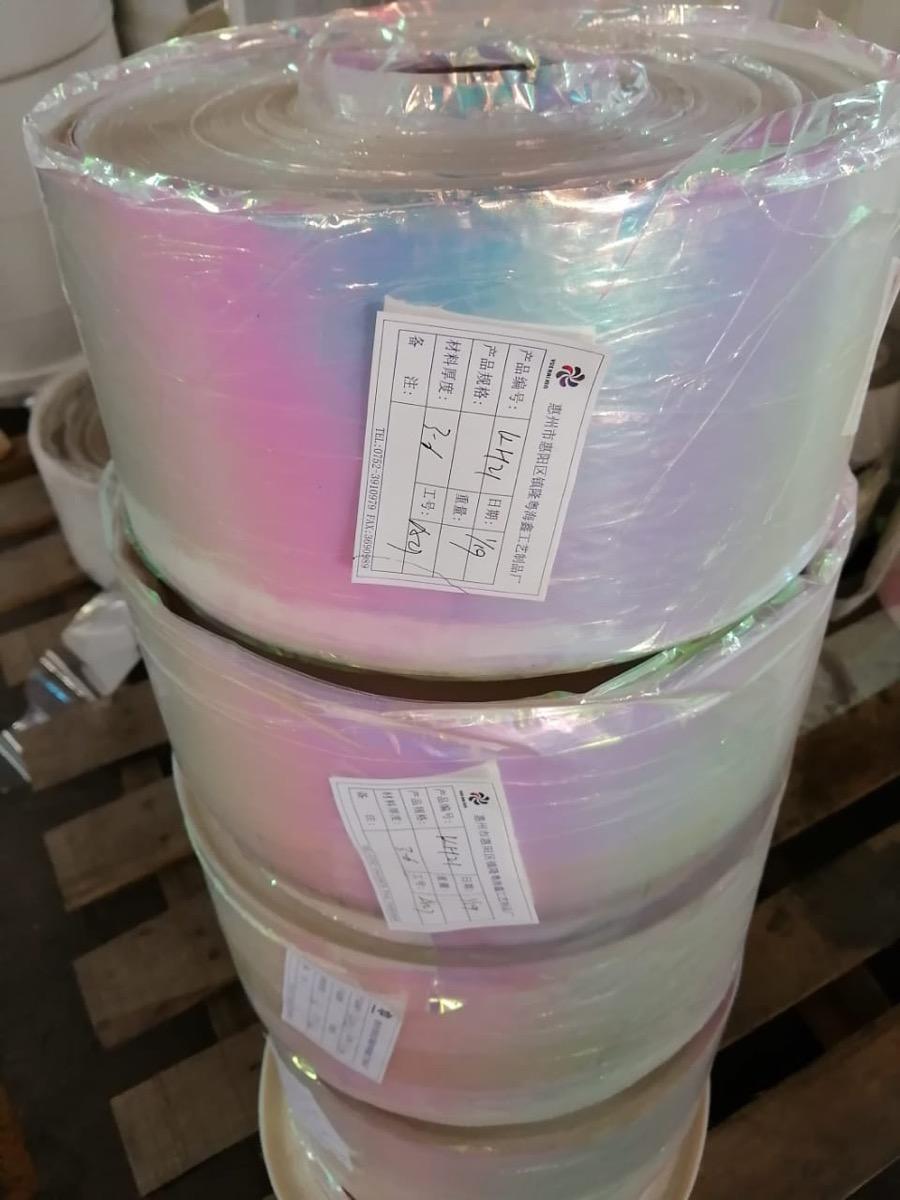
Whether formulating eyeshadow palettes, lip glosses, nail polishes, or compounding industrial epoxy resin, start with our 1kg low trial MOQ or complimentary 50g qualification sample with complete TDS and batch COA.