
Loading...
⚡ 1kg Low MOQ · Factory Direct Glitter & Mica⚡ Source Factory Direct Wholesale · Custom Loose Glitter & Mica Pigments · 1kg Low Trial MOQ · 48h Free 50g Lab Samples
mlmcustom@mlmcosmetic.com⚡ 1kg Low MOQ · Factory Direct Glitter & Mica⚡ Source Factory Direct Wholesale · Custom Loose Glitter & Mica Pigments · 1kg Low Trial MOQ · 48h Free 50g Lab Samples
mlmcustom@mlmcosmetic.comLoading...
Formulator selection matrix mapping pearlescent mica (5–200µm) and cosmetic glitter (50µm–3.0mm) particle sizes, loading percentages, binder compatibility, and viscosity targets.
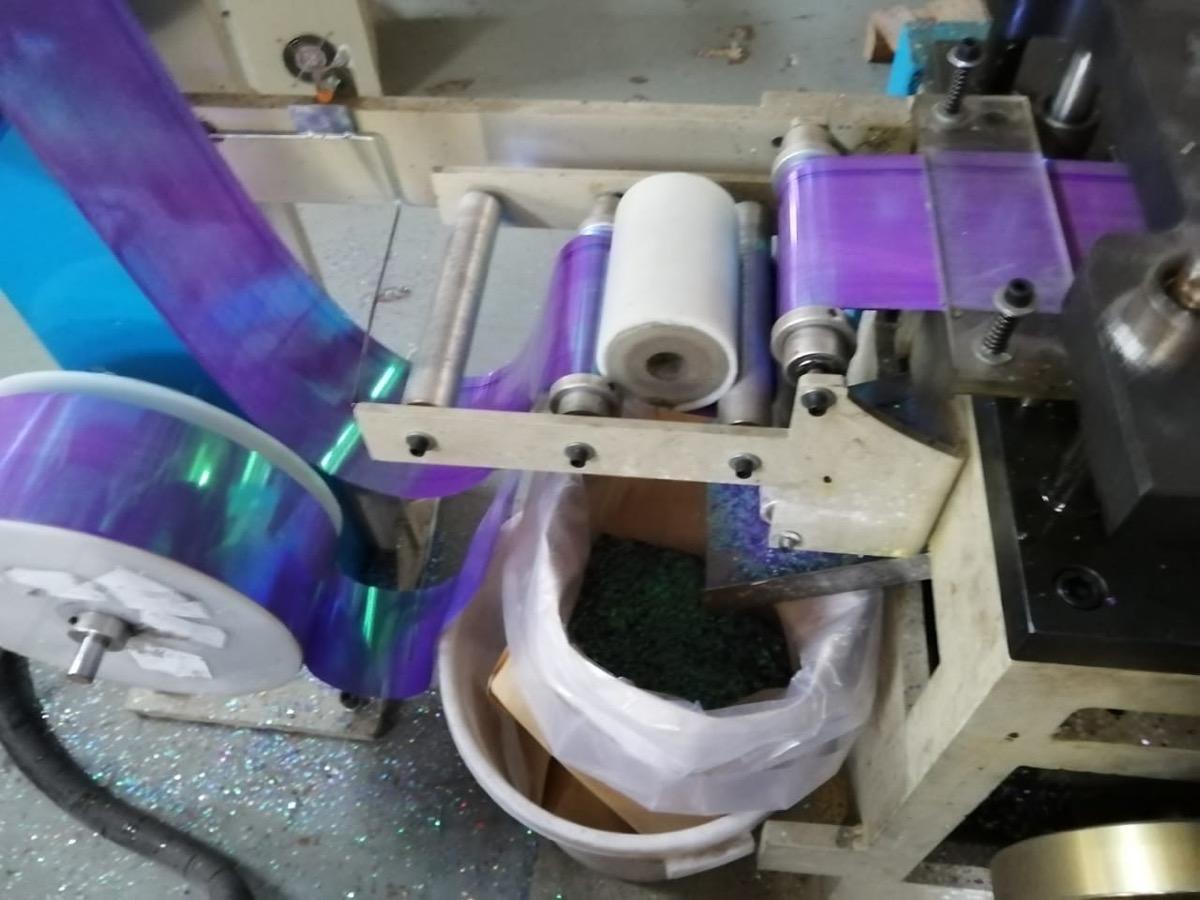
Choosing the wrong micron fraction or glitter cut for a given product format costs more than reformulation time—it drives consumer returns, batch rejections, and regulatory re-evaluation of finished goods. This guide provides a quantitative, application-resolved framework for matching Pearlescent Mica Powder, Chameleon Color-Shift Mica, and Holographic Cosmetic Glitter particle size distributions to the mechanical, optical, and regulatory demands of seven major cosmetic formats.
Pearlescent mica and synthetic fluorphlogopite are not spherical particles. They are high-aspect-ratio platelets (aspect ratio typically 20:1 to 80:1) whose optical and tribological behavior is governed by the full PSD curve, not a single median value.
Stokes' Law Settling Rate for a platelet approximated as an equivalent sphere:
v = (2r²(ρ_p − ρ_f)g) / (9η)
Where ρ_p for coated mica ≈ 2.8–3.0 g/cm³, ρ_f for a typical lip oil base ≈ 0.87–0.92 g/cm³, and η (dynamic viscosity) varies from ~50 mPa·s (thin lip oil) to >20,000 mPa·s (pressed wax base). Doubling d50 from 25 µm to 50 µm increases settling velocity approximately 4× at constant viscosity—which is why large-flake micas in low-viscosity emulsions require rheology modification (carbomer, hydroxyethyl cellulose, or fumed silica at 0.3–1.5% w/w) to maintain suspension stability over a 24-month shelf life.
Cosmetic glitter is specified by nominal hex cut (the distance between two parallel sides of the hexagonal flake), not by a PSD curve. The BOPET (biaxially oriented polyethylene terephthalate) or plant-cellulose substrate is die-cut to tight dimensional tolerances (±10% of nominal). Key engineering parameters:
| Product Format | Pigment Family | Optimal Fraction / Cut | Typical Loading % (w/w) | Key Formulation Notes |
|---|---|---|---|---|
| Pressed Eyeshadow & Highlighter | Pearlescent Mica / Synth. Fluorphlogopite | d50 20–60 µm; d90 <100 µm | 30–70% | Binder: isopropyl myristate 3–8%; fumed silica 0.5–1.5% for flow; drop-test target ≥50 cm Mohs compact; verify colorant eligibility per EU 1223/2009 Annex IV or FDA 21 CFR 73/74 for destination market |
| Pressed Eyeshadow & Highlighter | Holographic Glitter (BOPET) | 0.1 mm (1/256") | 5–20% | Do not exceed 25% or compact becomes friable; blend with 40–60 µm mica base for cohesion |
| Cream / Liquid Eyeshadow | Pearlescent Mica | d50 10–40 µm; d90 <80 µm | 15–40% | Thixotrope (hectorite clay 0.5–2%) prevents settling; avoid rotor-stator homogenization—use planetary mixer at ≤800 rpm |
| Lip Gloss & Lip Oil | Pearlescent Mica / Synth. Fluorphlogopite | d50 5–25 µm; d90 <50 µm | 1–8% | d90 <50 µm mandatory to avoid grit perception; fumed silica 0.3–0.8% for suspension; verify colorant per 21 CFR 73.1 (lip-contact) for US market; micro-glitter 0.05 mm permissible at ≤3% |
| Body Oil & Emulsion Lotion | Pearlescent Mica | d50 20–100 µm; d90 <200 µm | 0.5–5% | Large-flake (d50 60–100 µm) maximizes body-glow payoff; HEC or carbomer 0.2–0.6% for suspension; emulsion pH 5.5–7.0 to protect coating integrity |
| Body Oil & Emulsion Lotion | Holographic Glitter (plant cellulose) | 0.2 mm (1/128") | 0.5–3% | Plant-cellulose substrate stable to 100°C; verify rinse-off colorant eligibility per destination regulation |
| Solvent Nail Lacquer | Pearlescent Mica | d50 10–60 µm; d90 <100 µm | 1–6% | Solvent system (ethyl acetate / butyl acetate); organomodified hectorite (e.g., Bentone 38) 0.5–1.5% for anti-settle; avoid iron oxide blends that bleed in ketone solvents |
| UV/LED Gel Polish | Pearlescent Mica / Synth. Fluorphlogopite | d50 5–25 µm; d90 <60 µm | 1–5% | Fine fraction critical—large platelets scatter UV and inhibit cure depth; HEMA/di-HEMA TMHDC base; mix at ≤60°C; no glitter >0.1 mm in gel matrix (cure inhibition) |
| UV/LED Gel Polish | Holographic Glitter (BOPET) | 0.05–0.1 mm | 1–4% | Apply as top-layer suspension only if cure depth is a concern; BOPET stable to 160–180°C but gel cure exotherm rarely exceeds 80°C |
| Bath Bombs & Rinse-Off Gels | Pearlescent Mica | d50 40–200 µm; d90 <300 µm | 0.5–3% | Large-flake maximizes visual impact in water dispersion; citric acid / sodium bicarbonate matrix is mildly acidic on dissolution—verify coating acid stability; rinse-off colorant eligibility must be confirmed per EU, US, and destination-market lists |
| Bath Bombs & Rinse-Off Gels | Holographic Glitter (plant cellulose) | 0.2–1.0 mm | 0.5–2% | Plant cellulose preferred over BOPET for rinse-off environmental profile; verify regional colorant eligibility per exact SKU before commercialization |
| Symptom | Root Cause | Quantitative Engineering & Particle Size Fix |
|---|---|---|
| Hard sediment / bottom packing in lip oil | d90 >80 µm platelets settling under gravity; insufficient yield stress in base | Reformulate to d50 ≤20 µm, d90 ≤50 µm fraction; add fumed silica (Aerosil 200) at 0.5–1.0% w/w to build yield stress ≥0.5 Pa; target base viscosity ≥800 mPa·s at 25°C |
| Solvent dye bleed / halo in nail lacquer base | Organic dye co-dissolved in ethyl acetate/butyl acetate; pigment not fully insoluble in solvent system | Switch to inorganic oxide-coated mica (iron oxide, ultramarines); confirm solubility <0.01 g/100 mL in formulation solvent; verify colorant listing per destination market before substitution |
| Gritty / scratchy sensation on application | d90 >120 µm in a leave-on or lip-contact format | Downgrade to fraction with d90 <60 µm; re-mill if necessary and re-run PSD on Malvern Mastersizer; tactile threshold for grittiness on lip mucosa typically cited at >75 µm equivalent sphere diameter |
| Weak shimmer / low payoff on skin | Fraction too fine (d50 <10 µm) scatters light diffusely; loading below optical saturation | Increase d50 to 20–60 µm range; raise loading to 30–50% in pressed format or 4–8% in liquid; confirm Delta E vs. reference standard <0.8 on Konica Minolta spectrophotometer |
| Capping or cracking in pressed pan | Excess large-flake mica (d50 >80 µm) disrupts inter-particle packing; insufficient binder | Blend 60% fine fraction (d50 20–40 µm) with 40% coarse (d50 60–80 µm) for bimodal packing; increase binder (IPM or squalane) by 1–2%; target compact hardness 15–25 N on texture analyzer; drop-test ≥50 cm |
| Color fade / whitening in water gel (hydroalcoholic) | Coating hydrolysis at pH <4.5 or >8.5; TiO₂ or iron oxide coating dissolving | Maintain gel pH 5.5–7.5; use synth. fluorphlogopite substrate (higher chemical inertness vs. natural mica); request lot-specific acid/alkali stability data from COA; consider SiO₂-overcoated grades |
Understanding substrate thermal stability prevents irreversible optical damage during manufacturing:
Never process pearlescent mica platelets or glitter flakes through a rotor-stator high-shear homogenizer, colloid mill, or three-roll mill. The mechanical shear forces fracture platelet edges, reduce d90 unpredictably, destroy the layered interference structure responsible for pearlescence, and generate sub-5 µm fines that increase opacity and reduce chroma. Acceptable mixing equipment for pigment incorporation:
Q1: My UV gel polish is not curing to full depth—could the mica be the cause? Yes. TiO₂-coated mica fractions with d50 >30 µm scatter and absorb UV at 365–405 nm, reducing cure depth in gel systems. Switch to a finer fraction (d50 5–20 µm) or a lower-TiO₂ interference grade; reduce loading to ≤3% w/w; validate cure depth with a Shore A hardness test at 0.5 mm depth increments.
Q2: How do I specify PSD when ordering to ensure batch-to-batch consistency? Request the full d10/d50/d90 values on the COA, not just a nominal mesh range. MLM Pigments controls color to Delta E <0.8 via Konica Minolta spectrophotometry and screens heavy metals via in-house Agilent 7800 ICP-MS (Pb <2 ppm, As <1 ppm, Hg <1 ppm, Cd <1 ppm, Sb <0.5 ppm). Specify your acceptable d90 maximum as a purchase order line item.
Q3: Can I blend two mica fractions to achieve bimodal packing in a pressed compact? Yes, and this is recommended for pressed eyeshadow and highlighter formats. A 60:40 blend of d50 25 µm (fine) and d50 75 µm (coarse) fractions improves packing density, reduces binder requirement by approximately 15%, and increases drop-test durability. Validate the blend PSD on a Malvern Mastersizer before scaling.
Q4: What is the maximum glitter cut size I can use in a lip gloss without regulatory concern? Particle size itself is not the sole regulatory determinant—colorant identity, substrate material, and destination-market positive lists are. For US lip-contact products, verify each colorant against 21 CFR 73.1 and 73.2350 (mica) and 21 CFR 73.2396 (synthetic fluorphlogopite). For EU, cross-reference Annex IV of Regulation 1223/2009. Tactile acceptability for lip gloss typically limits practical use to 0.05 mm (micro-cut) at ≤3% w/w.
Q5: How does the 1 kg trial MOQ work, and can I get a sample first? MLM Pigments offers complimentary 50 g lab qualification samples, reviewed and dispatched within 48 hours of qualification approval. Production orders start at 1 kg in heat-sealed aluminum foil moisture-barrier pouches (MVTR <0.5 g/m²/day). Scale orders ship in 25 kg UN-rated poly-lined fiber drums. Submit your request via the Sample & Technical Request page.
Q6: Are plant-cellulose glitters optically equivalent to BOPET glitters at the same cut size? No. BOPET substrate has a refractive index of approximately 1.64–1.67, producing higher specular reflectance and more intense holographic diffraction. Plant-cellulose substrate (RI ≈ 1.53–1.55) produces a softer, lower-chroma sparkle at equivalent cut size and loading. For festival-intensity body glitter, BOPET at 0.4–1.0 mm delivers superior visual payoff; for rinse-off formats where environmental profile is a priority, plant-cellulose at 0.2–0.4 mm is the technically sound alternative—subject to regional colorant eligibility verification.
The particle size recommendations, loading ranges, thermal limits, and troubleshooting guidance in this document are engineering reference data compiled from formulation science literature and MLM Pigments' internal application development work. They do not constitute regulatory approval, toxicological clearance, or market authorization for any finished cosmetic product.
Before commercializing any formulation containing these materials, the responsible party must obtain and review: (1) lot-specific Certificate of Analysis (COA) including full PSD data; (2) Technical Data Sheet (TDS) for the exact SKU; (3) Safety Data Sheet (MSDS/SDS) for each ingredient; (4) ICP-MS heavy metal screening reports for the production lot; and (5) sign-off from a qualified cosmetic toxicologist with jurisdiction-specific expertise for every destination market (EU, US FDA, China NMPA, etc.). Colorant eligibility must be verified against the positive lists applicable to each product category and geography for the exact pigment identity—not a generic family name. This guide does not replace that due diligence.
Target Formulation Material:
Cosmetic Pigment Particle Size (Micron & Mesh) Selection Matrix for Eyeshadow, Lip Gloss, Body Oil & Nail Polish
Includes 50g sealed lab pouch, lot-specific COA, Technical Data Sheet (TDS), and ISO 22716 regulatory package.
Whether formulating eyeshadow palettes, lip glosses, nail polishes, or compounding industrial epoxy resin, start with our 1kg low trial MOQ or complimentary 50g qualification sample with complete TDS and batch COA.